Archive
How to Tilt Your Opponents in Poker (Without Crossing the Line)

In July I’m trying to write articles around a common theme, the theme is emotional intelligence in poker. We will continue to review different player types and strategies you can utilize to exploit their behaviors and improve your results.
Every poker player has experienced tilt. Whether it’s a bad beat, a missed draw, or a costly mistake, emotions can quickly affect decision-making. The best players know how to stay calm—but they also understand how to recognize when an opponent is tilting and, within the rules and good etiquette, apply pressure that causes even more mistakes.
If you’re looking to improve your Texas Hold’em strategy, learning how to capitalize on an opponent’s frustration can significantly increase your win rate. Here’s how to tilt your opponents the right way.
1. Play Solid, Aggressive Poker
Nothing frustrates opponents more than consistently running into strong hands and well-timed aggression. Raise your premium hands, value bet confidently, and apply pressure when the situation calls for it. Players who are already frustrated often begin calling too wide or making reckless bluffs against aggressive opponents.
A disciplined strategy is one of the most effective ways to create tilt naturally.
2. Stay Calm After Winning Big Pots
When you win a large pot, avoid celebrating or rubbing it in. Simply stack your chips and prepare for the next hand. Ironically, your calm demeanor can frustrate opponents even more because they don’t get the emotional reaction they’re hoping for.
Professional behavior often creates more psychological pressure than trash talk ever will.
3. Put Pressure on Short Stacks
Players with shrinking stacks frequently feel stressed. Continue making fundamentally sound raises when you’re in favorable positions. Tilted players often respond by making desperate all-in moves with weak holdings, giving you profitable opportunities to call with stronger ranges.
Remember: pressure should come from good poker decisions, not intimidation.
4. Let Your Opponents Make Their Own Mistakes
One of the biggest mistakes players make is trying too hard to force action. Instead, be patient. Tilted opponents often bluff too much, chase impossible draws, or overplay marginal hands. Give them the chance to hang themselves rather than forcing the issue.
Poker rewards patience.
5. Maintain a Friendly Table Presence

Being respectful doesn’t prevent you from gaining an edge. Smile, be courteous, and avoid arguments. Players who are already upset may become even more frustrated when they see you remaining composed while they lose control of their emotions.
Good sportsmanship is both ethical and profitable.
6. Recognize the Signs of Tilt
Watch for opponents who:
- Play far more hands than usual.
- Call large bets with weak holdings.
- Raise impulsively after losing a pot.
- Complain about bad luck.
- Show visible frustration or impatience.
Once you identify these signs, tighten your value betting and avoid unnecessary hero calls. Let their emotional decisions work in your favor.
Common Mistakes to Avoid

Trying to intentionally provoke someone with insults, slow rolling, excessive celebration, or disrespectful behavior is bad for the game and can create an uncomfortable atmosphere. The goal is not to upset people personally—it’s to recognize emotional mistakes and respond with fundamentally sound poker.
Winning because your opponents make poor strategic decisions is part of poker. Winning through poor etiquette is not.
Final Thoughts
Learning how to tilt opponents in poker isn’t about mind games or trash talk. It’s about understanding human psychology, recognizing emotional decision-making, and continuing to play disciplined, fundamentally sound poker while others lose focus.
The best players don’t create chaos—they stay composed while everyone else does the opposite. Over the long run, emotional control is one of the biggest edges you can have at the poker table.
If you enjoyed this article please like, share, comment and subscribe! Please click on sponsor ads to help keep our blog free. I hope you enjoyed reading and I’ll see you at the tables!

Is 4-Betting Just a Setup to Shove All-In?
In my last post we discussed 3 betting in 2026, what about the 4 bet? If you’ve played enough No-Limit Texas Hold’em, you’ve probably seen the action go raise, 3-bet, and then 4-bet. At lower stakes, many players assume that a 4-bet automatically means someone is committed to getting all of their chips into the middle. But is a 4-bet really just a setup to shove all-in? The answer is: not always.
What Is a 4-Bet?
A 4-bet is the fourth aggressive action before the flop. For example, Player A opens the pot, Player B 3-bets, and Player A responds with a 4-bet. This move is usually made with a very strong hand, but experienced players also include well-timed bluffs in their 4-betting range to stay balanced.
Does a 4-Bet Mean You’re Pot-Committed?
In many $1/$2 and $2/$5 cash games, a large 4-bet often leaves only a pot-sized bet remaining. That means both players may already be committed to the hand, making an all-in shove on the next action very common. However, stack depth matters. With 200 big blinds or more, skilled players can sometimes 4-bet and still fold if faced with overwhelming aggression from an opponent who only continues with premium hands.
When Should You 4-Bet?
The best 4-bets are made for value with premium hands like AA, KK, QQ, and AK against aggressive opponents. Occasionally, adding hands like suited wheel aces (A5s or A4s) as bluffs can make your strategy harder to exploit. The key is understanding your opponent. Against players who only 3-bet monsters, bluff 4-betting is usually a losing play. Against aggressive regulars who 3-bet frequently, well-timed 4-bets can be extremely profitable.
Final Thoughts
A 4-bet is often a step toward playing for stacks, but it isn’t automatically a commitment to shove all-in. Your stack size, your opponent’s tendencies, position, and table dynamics should all influence your decision. Great poker players don’t 4-bet simply because they have a strong hand—they 4-bet because it’s the most profitable play in the situation.
Whether you’re grinding your local $1/$2 cash game or battling tougher $2/$5 players, understanding when a 4-bet is for value, when it’s a bluff, and when it leads to an all-in confrontation will make you a far more dangerous opponent at the table.
If enjoyed this article please like, share, comment and subscribe. Thanks for reading and see you at the tables!
How to Study Poker and Improve Your Game: A Complete Guide for Serious Players
If you’ve ever wondered why some poker players consistently win while others struggle to break even, the answer often comes down to study habits. While experience at the tables is important, the most successful players dedicate time away from the felt to improving their skills. Whether you’re grinding $1/$2 cash games, playing $2/$5 No-Limit Hold’em, or entering poker tournaments, learning how to study poker effectively can dramatically increase your win rate.
Why Studying Poker Matters
Poker is a game of skill, strategy, and continuous adaptation. The players who consistently profit are usually those who spend time analyzing hands, learning new concepts, and correcting mistakes. Simply playing more hours isn’t enough. To become a better poker player, you need a structured approach to poker study.
Review Your Poker Hands
One of the best ways to improve your poker game is by reviewing hand histories after every session. Focus on:
- Large pots won and lost
- Tough river decisions
- Bluffing opportunities
- Spots where you felt uncertain
Ask yourself if you made the most profitable decision with the information available. Over time, you’ll begin identifying recurring mistakes and leaks in your game.
Learn Strong Preflop Strategy
Many costly errors occur before the flop. Understanding proper preflop ranges can instantly improve your results.
Key areas to study include:
- Opening ranges by position
- Blind defense strategy
- 3-betting and 4-betting ranges
- Tournament push-fold charts
Strong preflop fundamentals create easier decisions on later streets and help avoid difficult situations.
Watch Poker Training Videos
Poker training videos are an excellent resource for players looking to improve. Watching experienced players explain their thought process can help you better understand:
- Hand reading
- Bet sizing
- Bluffing frequencies
- Exploitative strategies
- Game theory concepts
To maximize learning, pause the video before key decisions and determine what action you would take.
Join a Poker Study Group
Discussing hands with other players can expose you to new perspectives and strategies. Whether it’s a local poker group, an online forum, or a private study session with friends, collaboration can accelerate improvement.
When sharing hands, include:
- Stack sizes
- Positions
- Betting action
- Opponent tendencies
The goal is not just to know what happened, but to understand why a particular play was correct or incorrect.
Use Poker Software and Tools
Modern poker players have access to powerful software that can help analyze hands and improve decision-making.
Popular study methods include:
- Equity calculators
- Range analyzers
- Poker solvers
- Session tracking software
Even spending a few hours each week studying equity can significantly improve your understanding of poker mathematics and expected value.
Study Your Opponents
Live poker is often about exploiting player tendencies rather than playing perfectly balanced strategy.
Look for common player types such as:
- Calling stations
- Tight-passive players
- Loose-aggressive players
- Recreational players
Taking notes and recognizing patterns can help you make better adjustments and maximize profits.
Improve Your Mental Game
Many poker players focus entirely on strategy while ignoring the mental side of the game. However, tilt and emotional decision-making can quickly erase hours of good play.
To strengthen your mental game:
- Accept short-term variance
- Focus on decision quality
- Practice bankroll management
- Take breaks when frustrated
- Maintain realistic expectations
The ability to remain disciplined during losing sessions is often what separates winning players from losing players.
Track Your Results
Successful poker players track their performance over time. Keeping records allows you to identify strengths, weaknesses, and trends in your game.
Track:
- Hours played
- Profit and loss
- Stakes played
- Win rate
- Session notes
Accurate records provide valuable insight into your long-term progress and help keep emotions out of the equation.
Final Thoughts
Learning how to study poker effectively is one of the biggest edges a player can develop. The combination of hand reviews, preflop study, training videos, software analysis, opponent observation, and mental game work creates a foundation for long-term success.
If you’re serious about becoming a winning poker player, consider dedicating at least one hour of study for every five hours played. Over time, that investment can lead to better decisions, fewer mistakes, and increased profits at the poker table.
If you enjoyed this article please like, share, comment and subscribe. Thanks for reading and I’ll see you at the tables!
The Art of Trapping in Tournament Poker
🪤 The Art of Trapping in Tournament Poker: How to Maximize Value and Punish Aggression
Learn how to trap effectively in tournament poker. This guide breaks down when to slow‑play, how to induce bluffs, which opponents to target, and the stack‑size dynamics that make trapping profitable.
What Is “Trapping” in Tournament Poker?
In tournament poker, trapping means intentionally disguising the strength of your hand to induce:
- Bluffs
- Thin value bets
- Overcommitted calls
- Aggressive mistakes
A successful trap doesn’t just win a pot — it coaxes your opponent into building it for you.
The key is knowing when a trap prints chips and when it burns equity.
Why Trapping Works in Tournaments
Tournament dynamics amplify the power of a well‑timed trap:
- Players c‑bet too often
- Big stacks apply pressure
- Tilted opponents over‑bluff
- ICM makes people fold too much — except when they don’t
- Medium‑strength hands get overplayed deep in events
When you understand these tendencies, you can weaponize them.
The Three Conditions for a Profitable Trap
- You Must Be Ahead of Their Betting Range
Most players slow‑play hands that are strong but vulnerable. That’s a leak.
Hands that should not be traps:
- Top pair, good kicker
- Overpairs on wet boards
- Nut flushes on paired boards
- Straights on two‑tone textures
Hands that can make for good traps:
- Sets on dry boards
- Nut straights with no redraw concerns
- Top boat or quads
- Overpairs on ultra‑dry flops
If your hand is strong but vulnerable, bet it.
If your hand is strong and invulnerable, consider trapping.
- Your Opponent Must Be Aggressive Enough to Take the Bait
You can’t trap someone who doesn’t bet.
Ideal trapping targets:
- High‑frequency c‑bettors
- Tilted players
- Big stacks bullying the table
- Overconfident regs who “must” win every pot
- Players who overvalue top pair
If they’re capable of firing multiple barrels, they’re capable of paying you.
- Stack Sizes Must Support the Trap
Stack depth determines whether trapping is viable.
Short stacks (0–20 BB):
Trapping is almost always bad. You want clean, high‑equity shoves.
Medium stacks (20–40 BB):
Trapping becomes risky — pot control matters more.
Deep stacks (40+ BB):
This is where trapping shines. You have room to:
- Let them bet
- Let them raise
- Let them overcommit
Deep stacks + aggressive villain = green light.

The Best Spots to Trap in Tournament Poker
- Preflop With Premiums Against Aggressive Players
AA, KK, QQ, AK suited can be flatted in position when:
- Villains squeeze too often
- The table is aggressive
- You’re deep enough to play postflop
This is especially effective against players who can’t resist “punishing limpers” or “isolating weak players.”
- Dry Flops Where You Have the Board Crushed
Examples:
- A♣ 7♦ 2♠ with AA
- K♠ 8♦ 3♣ with a set
- Q♣ J♦ T♠ when you hold AK
Dry boards let opponents bluff freely without giving them a cheap draw.
- When You Block Their Strong Hands
Blockers make traps safer.
Examples:
- Holding the ace of the suit on a monotone board
- Holding top set on a paired board
- Holding the nut straight on a disconnected runout
When you block the nutted hands, your opponent is more likely to bluff.
- Against Players Who Overvalue Top Pair
Tournament fields are full of players who will stack off with:
- KQ on a K‑high board
- AQ on an A‑high board
- JJ on a low board
If you know they can’t fold, you don’t need to bet — you just need to let them bet for you.
The Psychology Behind a Good Trap
A trap works because it tells a story your opponent wants to believe:
- “He missed the flop.”
- “He’s scared of the overcard.”
- “He’s weak because he checked.”
- “He’s giving up.”
Your job is to sell weakness so convincingly that they feel invited to take the pot away.
The best traps feel like you’re handing them a shovel!

Common Trapping Mistakes (And How to Avoid Them)
- Slow‑playing on wet boards
- Trapping short stacks
- Trapping nits
- Checking because you’re scared, not inducing
- Letting multiway pots develop
- Underestimating how often people check back
A trap that gives a free card is not a trap — it’s a donation.
Final Takeaway: Trapping Is a Weapon, Not a Default Strategy
Trapping is not about being sneaky.
It’s about being strategic.
A profitable trap requires:
- The right opponent
- The right board
- The right stack depth
- A hand strong enough to withstand chaos
When those conditions align, trapping becomes one of the most profitable — and most satisfying — plays in tournament poker.
If you enjoyed this article please like, share, comment and subscribe. Thank you for reading and I’ll see you at the tables!
Early Stage play in a multi table Poker Tournament
Mastering Early-Stage MTT Play: Play Tight, Stick to Premium Hands, and Exploit Weakness Like a Pro
If you’ve ever busted out of a poker MTT in the first two hours with a speculative suited connector or a marginal ace, you know the pain. The blinds are tiny, the stacks are deep (usually 100+ big blinds), and there are still hundreds of players left. Yet so many amateurs treat the early stages like a cash game and spew chips left and right.
The truth? Playing tight early is one of the highest-EV adjustments you can make in modern MTTs. It’s not “nitty” — it’s disciplined. You’re not there to gamble; you’re there to survive, accumulate, and exploit the recreational players who are dying to give you their chips.
Here’s exactly how to do it — from hand selection to exploitation tactics that print money when everyone else is playing loose.
Why Tight Is Right in the First 2–4 Levels
- Stack preservation is king. With 100–200bb effective stacks and tiny blinds (0.5–1bb per orbit), you don’t need to steal blinds to stay alive. One bad flip or cooler can cripple you for the entire tournament.
- ICM hasn’t kicked in yet. You’re not fighting for pay jumps — you’re fighting for chip EV. Premium hands realize their equity best against multiple callers and deep stacks.
- The field is at its weakest. Recreational players are still in “fun mode.” They limp, call 3-bets with KJo, and pay off top pair with second pair. Your job is to be the shark in the tank.
Tight play early isn’t passive — it’s selective aggression. You play fewer hands, but you play them for maximum value.
The Early-Stage Opening Range: Only the Top ~8–10% of Hands
Forget the 25% “standard” cash-game range. In an MTT with 100+bb stacks and 9-handed tables, your default opening range should look something like this (adjust slightly by position):
Early Position (UTG, UTG+1)
AA–TT, AKs–AQs, AKo–AQo, KQs
Middle Position
Add: 99–88, AJo, KJs, QJs, JTs
Late Position (Cutoff, Button)
Add: 77–66, ATo–A9s, KQo, suited connectors down to 98s (only if you have a solid postflop edge)
Big Blind Defense
Call or 3-bet only with the above plus occasional suited broadways and pocket pairs when the price is right.
Pro Tip: If the table is super soft (multiple limpers every orbit), you can widen your late-position range slightly — but never open 22 or 76s from early position just because “it’s cheap.”
How to Play Your Premium Hands for Maximum Value
- AA–KK: Raise big, always.
3–4x in early position, 2.5–3x late. If there are limpers, iso-raise huge (5–7x + 1x per limper). You want to isolate the weak players and build the pot immediately. - QQ–JJ & AK: Your bread-and-butter.
Raise standard sizing. 3-bet AK every time vs opens (especially from loose openers). With QQ–JJ, mix in flat-calls vs tight opens but 3-bet aggressively vs loose players. - Premium suited aces (AQs–AJs) and KQs:
These are your money-makers against weak ranges. Raise, call 3-bets in position, and be ready to stack off on ace-high flops when villain shows weakness. - Pocket pairs 88–TT:
Set-mine only if you’re closing the action or getting great implied odds (multiple callers behind). Otherwise, raise and take it down preflop.
Golden Rule: Never limp. Never flat-call raises with these hands unless you’re trapping a maniac (and even then, 3-bet most of the time).
Exploiting Weakness: The Real Money-Maker

This is where tight players separate themselves from the pack. While you’re waiting for premium hands, you’re laser-focused on the table dynamics.
Target these player types early:
- The “Fun Guy” — Limps 40% of hands, calls 3-bets with any two broadways, and never folds top pair.
- The Sticky Fish — Calls every raise with suited connectors and small pairs, then pays off when he hits second pair.
- The Over-Limper — Limps every orbit from every position. These players are printing money for you.
Exploitation Tactics:
- Iso-raise relentlessly. Limpers + one raise = your premium hand gets called by junk. A 5–7x iso-raise with AK or QQ often wins the pot preflop or gets heads-up against a dominated hand.
- 3-bet light vs weak openers. If a loose early-position player opens 25%+, 3-bet AK, AQ, and even some bluffs (but mostly value). They fold too much and call too wide when they do continue.
- Barrel weakness. On A-high or K-high boards, these players will check-fold second pair or gutshots way too often. One or two continuation bets usually take it down.
- Value bet thin. They call down with Kx on an A-high board. Bet your top pair for three streets.
Example Hand (real-life spot I’ve seen 100 times):
Hero (Button, 150bb): AKo
Villain (MP, recreational, limped 6 of last 8 orbits): Limps
Hero raises 5x. Villain calls.
Flop: A♠7♥3♦
Villain checks. Hero bets 60% pot. Villain calls.
Turn: 9♣
Villain checks. Hero bets 70% pot. Villain calls.
River: 2♠
Villain checks. Hero bets 80% pot and gets called by K7o.
That’s +150bb because you played tight early and waited for the right spot to isolate weakness.
Common Mistakes to Avoid
- Opening too wide early just because “the blinds are small” — variance will destroy you.
- Getting married to suited connectors preflop — save them for middle/late stages when stacks are shallower.
- Failing to adjust when the table tightens up — if everyone is suddenly playing solid, widen slightly in position.
- Slow-playing monsters — build the pot early against weak players who over-call.
Final Thoughts: Tight Early = Stack Monster Later
Playing tight early in an MTT isn’t boring — it’s strategic patience. You’re not folding to win; you’re folding to set up the biggest stack at your table when the blinds start to matter and the weak players start making massive mistakes.
Stick to the top hands, iso-raise the limpers, 3-bet the weak openers, and value bet relentlessly. Do this for the first 2–4 levels and you’ll find yourself at the final table with a massive stack far more often than the gamblers who “just wanted to see a flop.”
Now go crush those early stages.
What’s your biggest leak early in MTTs? Drop it in the comments — I read every one.
If you enjoyed this article please like, share, comment and subscribe! Thank you and I’ll see you at the tables!

3rd Annual Championship Tournament!

February 17th was the 3rd annual Championship Tournament at our local home game! The top 10 scoring players throughout the year are invited to play in the event! So even making it to the Championship should be considered a victory in itself. The pot is accumulated throughout out the year from the monthly tournaments so this year’s prize was Awesome and there’s also the coveted Championship Bracelet. The tournament host Mel and the club owners Scott and Leslie do an incredible job managing this throughout the year! Thank you to all of them for hosting such a great series of tournaments!

The tournament brings out the best gamesmanship, the best bluffs and steals, the best play and of course the best banter! This year was no exception as there was definitely so wild moves, and wilder calls!

This year on top of the prize pool each player added an additional buy in and every player put up a 5 buck bounty on themselves, making the action even more aggressive!
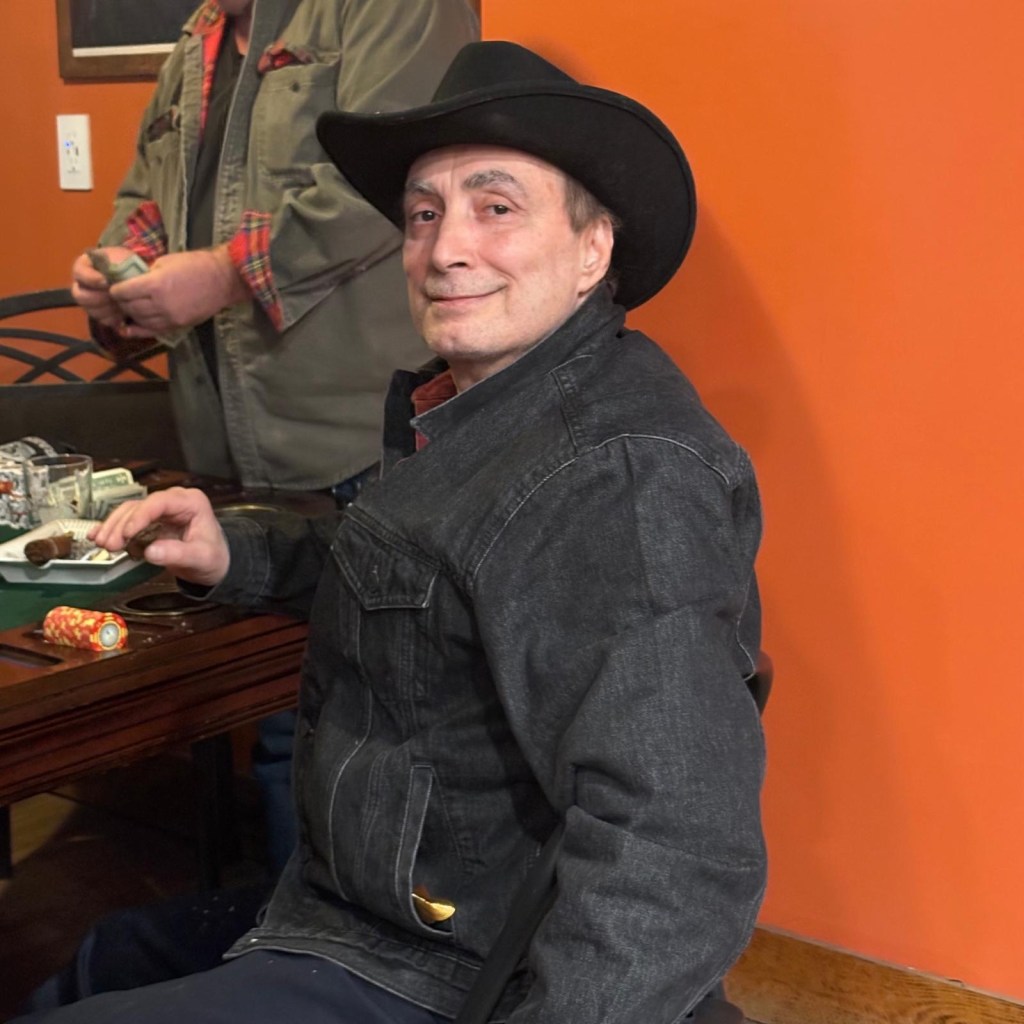
The final 5 Lem, Scotty “doesn’t know “ Greg ( by all accounts is one of the most improved) myself, and the chip bully ( sorry chip leader) “5 buck Chuck” ( new nickname cuz he was collecting bounties)
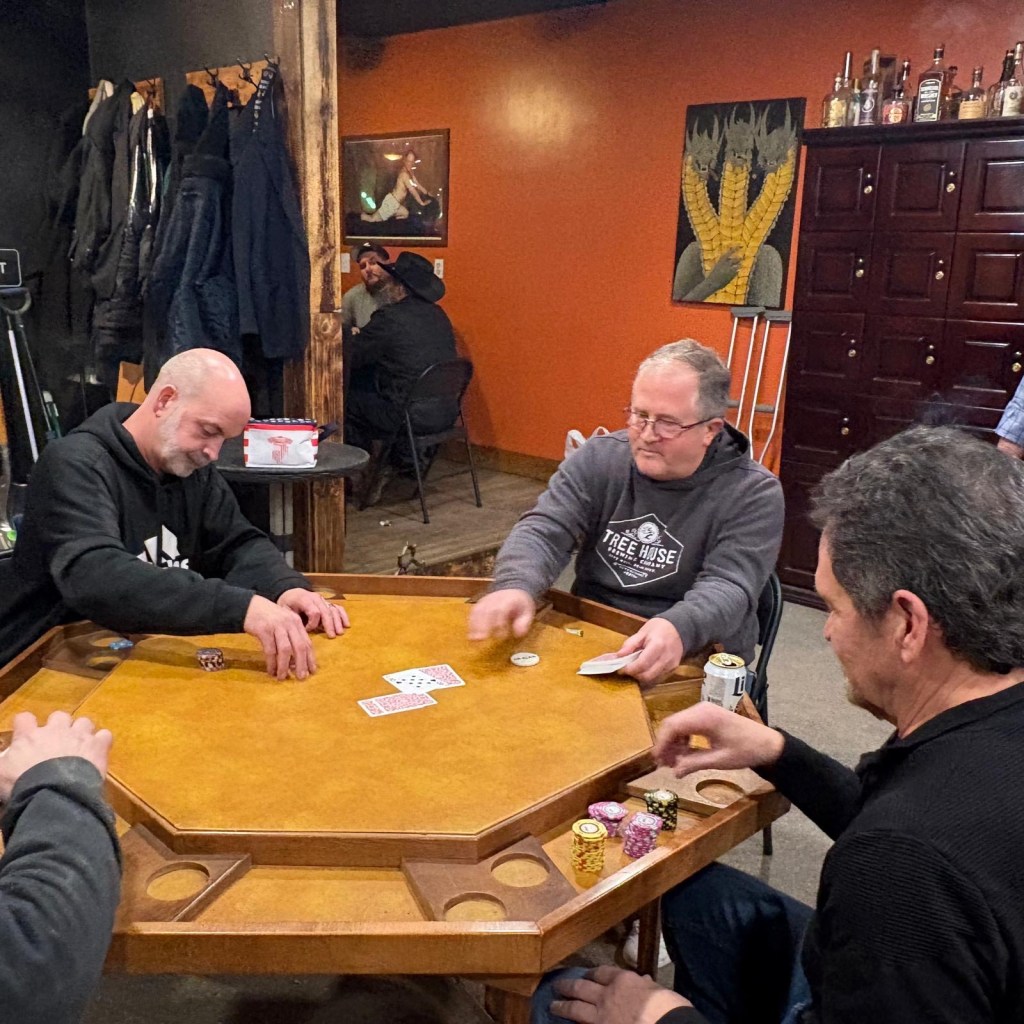
Final 2 heads up myself and Chick decided to chop, could’ve played a bit longer but honestly Chuck’s play deserved to win, consistent, aggressive play I enjoyed being a part of it! Great Job Chuck now everyone can go after you for the rest of the year!!!
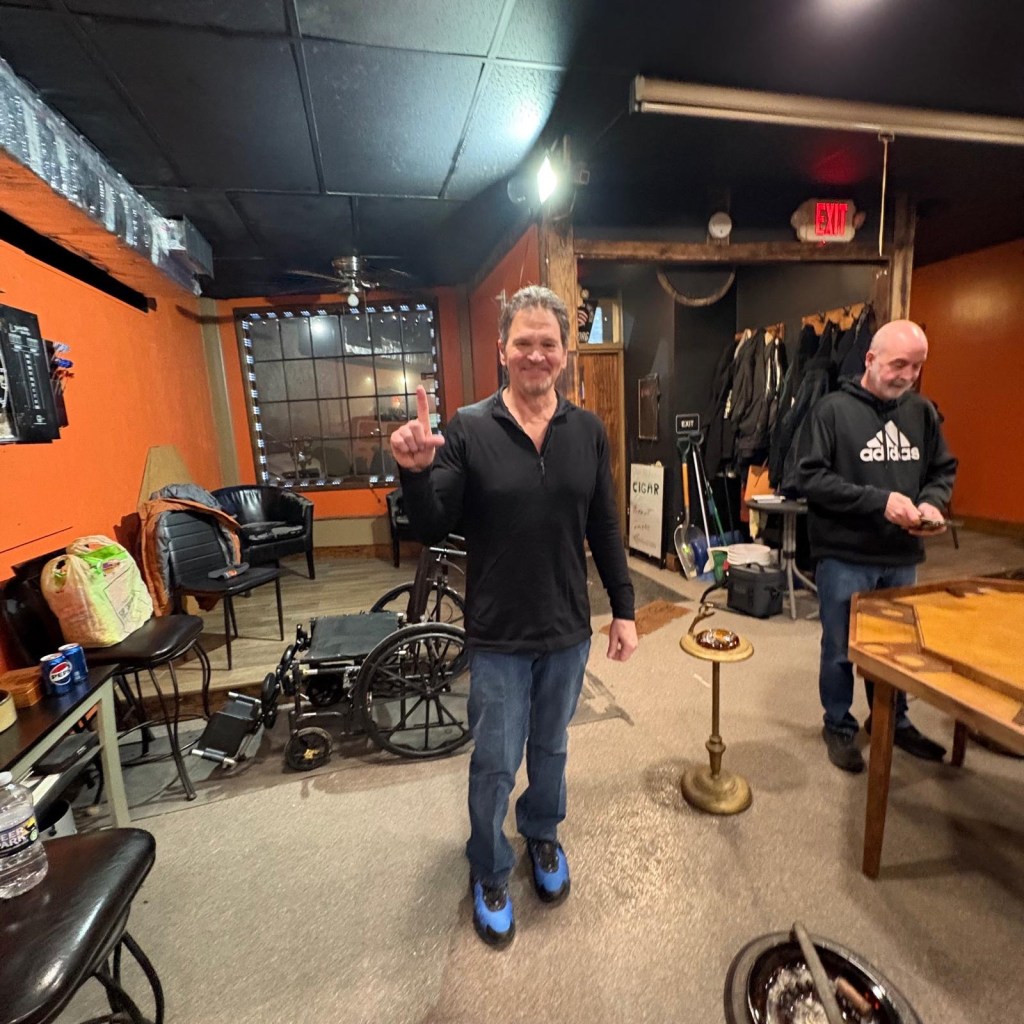
I’ve managed to be selected for all 3 Championships so far however have only been able to get to 2nd in 2 of the 3. For me I enjoy the game, I enjoy the people, but hopefully next year I can win the freaking bracelet!

If you enjoyed this article please like, comment or subscribe. Thanks for reading and I’ll see you at the tables!

Winning $1/$2 Heads-Up Poker: Why Aggression Is King

Playing Aggressive Heads-Up Poker in a $1/$2 Cash Game
Heads-up poker at $1/$2 cash games is where aggression truly pays off. With only two players at the table, hand values change, ranges widen, and passive play quickly gets exposed. If you’re not applying pressure, you’re likely bleeding chips.
In this guide, we’ll break down how to play aggressive heads-up poker at $1/$2, when to apply pressure, and how to avoid the most common mistakes low-stakes players make.
Why Aggression Is So Important in $1/$2 Heads-Up Poker
At $1/$2, many players are uncomfortable playing heads-up. They’re used to multi-way pots and tight ranges. This creates a huge edge for aggressive players.
Aggression allows you to:
Win blinds consistently Pick up small pots without showdown Force opponents into mistakes Control the tempo of the match
Since both players post blinds every hand, folding too often simply isn’t an option. Aggressive poker is winning poker heads-up.
Preflop Strategy: Raising Wide at $1/$2 Heads-Up
In a heads-up $1/$2 cash game, opening ranges should be very wide—especially on the button.
Recommended Preflop Approach
Button: Raise 70–90% of hands Big Blind: Defend wide and mix in 3-bets Use smaller raise sizes (2x–2.5x) to keep pots manageable
Hands like:
Any Ace Any King Suited connectors Small pocket pairs One-gap suited hands
…are all playable when you’re playing aggressively.
Most $1/$2 opponents fold too often preflop or call too wide without a plan. Aggression exploits both tendencies.
Postflop Aggression: C-Betting at $1/$2
Low-stakes players miss flops frequently and hate facing multiple barrels. This makes continuation betting extremely profitable.
Heads-Up C-Betting Tips
C-bet often on dry boards (A-7-2, K-8-3) Use smaller sizing (30–40% pot) Fire second barrels when overcards or scare cards hit Value bet thin when you connect
You don’t need a big hand to bet. You need range advantage and confidence.
Playing Aggressive in Position vs Out of Position
In Position (Button)
This is where aggression shines:
Bet more frequently Float flops and apply turn pressure Bluff rivers selectively Extract thin value from top pair and second pair
Out of Position (Big Blind)
Check-raise strong hands and strong draws Avoid calling passively with weak hands Use aggression to deny equity
At $1/$2, many players check too much out of position. Punish that.
Reading Your Opponent Through Aggression
Aggression isn’t just about winning pots—it’s about gathering information.
Watch how your opponent reacts:
Folding too often to raises? Calling flops but folding turns? Never bluff-raising?
Each aggressive action helps define their range and tendencies. Passive play gives away control.
Common $1/$2 Heads-Up Mistakes to Avoid
Even aggressive players can torch money at low stakes by ignoring player pools.
❌ Over-bluffing calling stations
❌ Bluffing scare cards against unobservant players
❌ Refusing to slow down with marginal hands
❌ Playing scared after losing a pot
At $1/$2, aggression works best when paired with discipline and observation.
Final Thoughts: Aggression Wins $1/$2 Heads-Up Cash Games
If you want to win consistently in $1/$2 heads-up poker, aggression is non-negotiable. You don’t need fancy moves—just pressure, position, and persistence.
Play more pots. Bet more flops. Force decisions.
Because in low-stakes heads-up cash games, the player applying pressure usually walks away with the stack. ♠️
Thank you for reading this article. If you enjoyed it please like, share or comment! See you at the tables

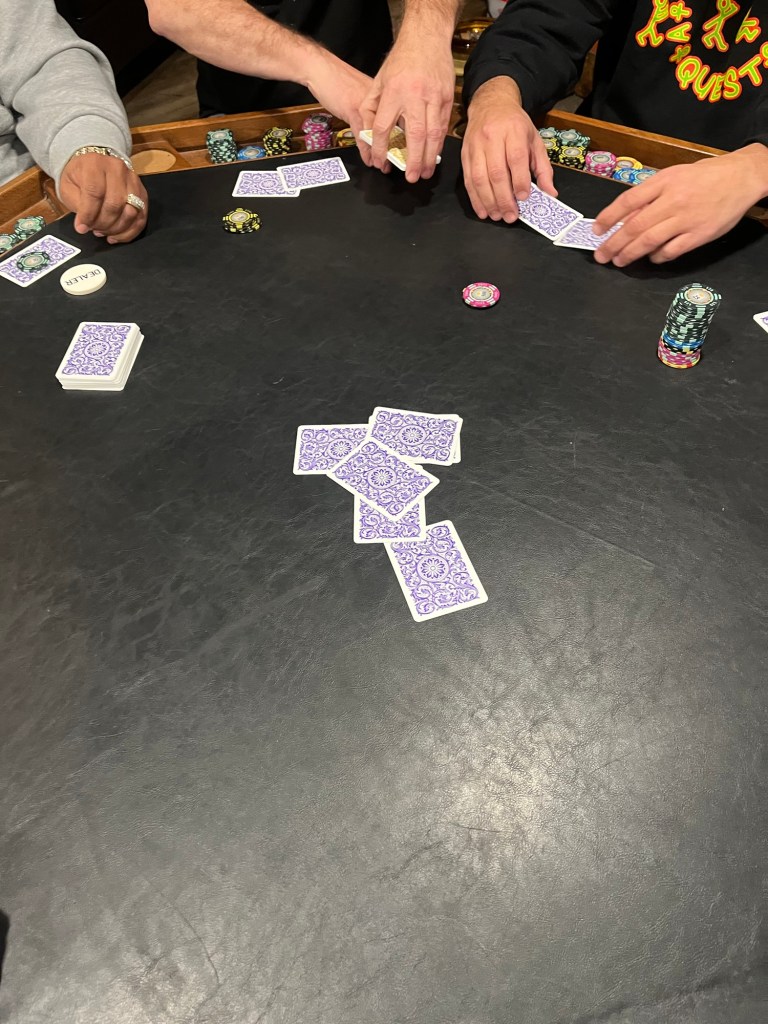
Poker Home Game Fun!!
Why Nothing Beats a Poker Home Game
There’s something special about a poker home game that no casino, app, or online table can ever fully replicate. It’s not just about the cards—it’s about the people, the laughs, the stories, and the memories that get shuffled into every hand.
The Comfort Factor
Home games are relaxed by nature. You’re not sitting under bright casino lights or listening to slot machines screaming in the background. Instead, you’re in a living room, basement, or garage, wearing comfortable clothes, sitting in a familiar chair, and enjoying the kind of atmosphere that instantly puts you at ease. That comfort makes every hand more enjoyable—win or lose.
Friends, Trash Talk, and Inside Jokes
A home game is as much a social event as it is a poker night. Friendly trash talk, ongoing rivalries, and inside jokes are part of the experience. Someone always brings up that bad beat from three months ago. Someone else insists they’re “running cold” for the fifth week in a row. These moments are what turn a simple card game into a weekly tradition.
The Snacks Matter
Let’s be honest—home game food is undefeated. Whether it’s pizza boxes stacked on the counter, wings in the oven, or someone’s famous homemade chili, the snacks become part of the night’s identity. No overpriced casino burgers here—just comfort food shared among friends, usually eaten between hands or during a dramatic all-in.
Low Stakes, High Fun
Most home games keep the stakes reasonable, which makes the night about entertainment rather than pressure. You can experiment with plays, chase a draw once in a while, or make a hero call without worrying that it’ll ruin your week. The lower stakes also keep everyone laughing and coming back for more.
Stories You’ll Talk About for Years
Every home game produces legendary hands. The unbelievable river card. The bluff that somehow worked. The time someone accidentally mucked the winner. These stories get retold again and again, growing slightly more dramatic each time. Long after the money is gone, the memories remain.
It’s About Belonging
At its core, a poker home game is about connection. It’s about unplugging for a few hours, sitting around a table, and sharing an experience with people you enjoy. The cards give everyone a reason to gather, but the real value comes from the camaraderie.
Final Thoughts
Poker home games aren’t just games—they’re traditions. They’re laughter, competition, comfort, and community all wrapped into one deck of cards. If you’ve got a table, a few friends, and a set of chips, you already have everything you need for a great night.
So shuffle up, deal, and enjoy the fun. ♠️♥️♣️♦️
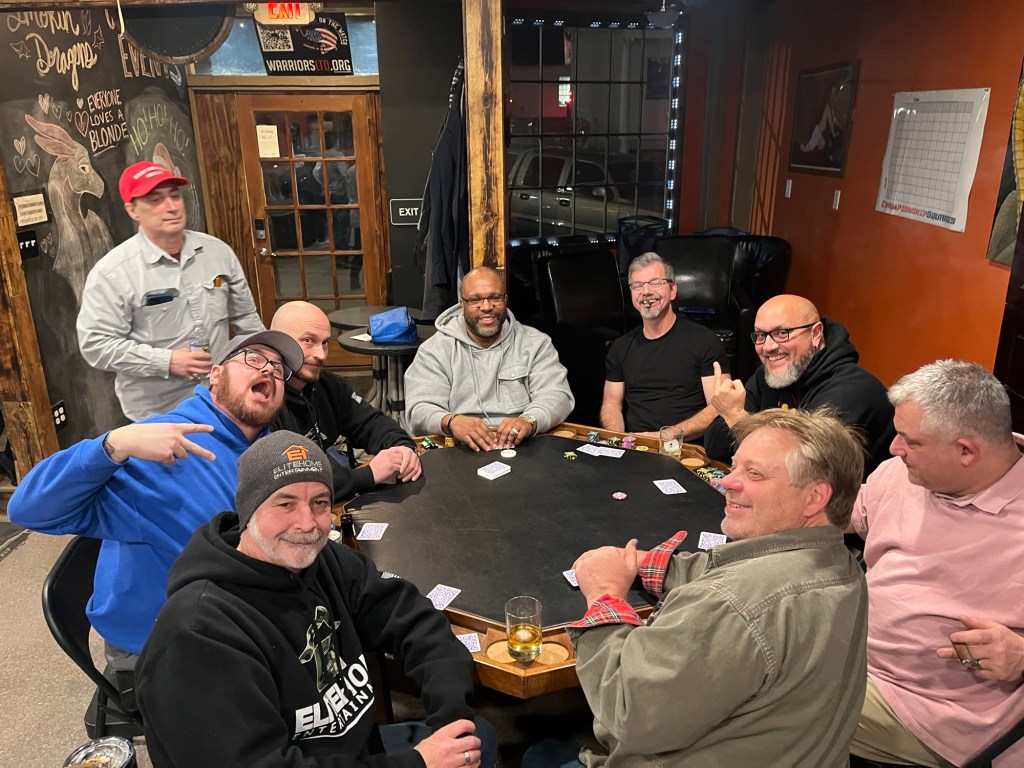

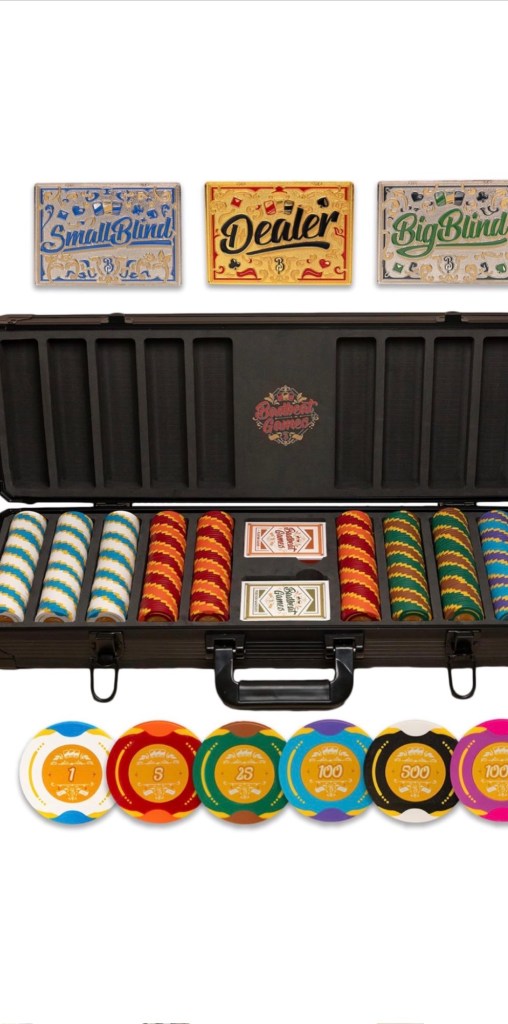
https://amzn.to/3NjoVQx great home game chip set click the link to order!



Recent Comments