Archive
🃏 Hand of the Day: Pocket Aces Go Unchallenged on the Turn
Hand of the Day: Pocket Aces Turn Shove Wins Without a Showdown
There are few better starting hands in Texas Hold’em than pocket aces.
But getting dealt AA is only the beginning. The real challenge is figuring out how to get maximum value while protecting yourself when the board starts getting dangerous.
Today’s Hand of the Day is a great example.
I picked up A♠A♥ and watched the action develop.
The first player raised to $20.
A second player made it $40.
When the action got to me, I decided to flat call.
We went to the flop three-handed.
Pre-Flop
Player 1: $20
Player 2: Raises to $40
Hero: Calls $40 with pocket aces
The flop came:
9♣ 6♦ 4♥
Not a bad flop for pocket aces.
There wasn’t an immediate flush draw, although the connected cards created some straight possibilities.
The first player to act bet $60.
The second player called.
I looked down at my pocket aces and decided to flat call again.
At this point, I wasn’t interested in blowing up the pot unnecessarily. I was happy to allow my opponents to continue putting money into the middle.
Flop Action
Player 1: Bets $60
Player 2: Calls $60
Hero: Calls $60
Then came the card that changed the hand.
5♣
The board was now:
9♣ 6♦ 4♥ 5♣
Suddenly, the board was much more dangerous.
Straight possibilities were developing, and the second club created potential flush draws.
The original bettor fired another $60.
The next player called.
Now the action was back to me.
I had a decision.
Call?
Raise?
Or put maximum pressure on both players?
I chose the third option.
ALL IN.
I shoved my entire stack into the middle.
The Tank
Both players went into the tank.
And the second player really went into the tank.
Approximately five minutes.
That’s a long time to make a poker decision.
Eventually, both players folded.
The pot was mine.
No showdown.
No river.
No sweat.
The One-Ace Reveal
After both players folded, I decided to show one ace.
Then I mucked the other.
They never got to see the complete hand.
Sometimes in poker, you don’t have to show the whole story.
You just have to tell enough of it.
What Can We Learn From This Hand?
1. Don’t Automatically Slow Down With AA
Pocket aces are the best starting hand in Texas Hold’em, but they aren’t invincible.
The board changes.
Your opponents’ ranges change.
And your strategy needs to change with them.
2. Pay Attention to Turn Cards
The 5♣ wasn’t necessarily a terrible card for pocket aces, but it made the board considerably more connected.
Straight draws and flush draws were now much more relevant.
Giving opponents another cheap card wasn’t particularly appealing.
3. Sometimes Calling Is Better Early
Pre-flop, I could have put in another raise.
On the flop, I could have raised the $60 bet.
Instead, I called.
That kept my opponents involved and allowed them to continue betting.
Then, when the board became more dangerous, I changed gears.
4. Put Difficult Decisions on Your Opponents
The all-in shove forced both players to make a major decision.
They had already invested money.
They had draws and potential made hands to consider.
But now they had to risk their entire stack.
Neither player was willing to do it.
That’s the power of pressure in poker.
The Final Verdict
Pocket aces.
Three players to the flop.
9♣ 6♦ 4♥.
5♣ turn.
Two bets and a call.
Then the shove.
Both opponents folded.
One opponent tanked for five minutes before finally letting the hand go.
And pocket aces never had to see a river.
Hand of the Day Takeaway
Don’t fall in love with your starting hand.
Pocket aces may be the best starting hand in poker, but good players don’t just play their cards — they play the board, the betting action and their opponents.
Sometimes the best way to win with pocket aces isn’t to show them at showdown.
Sometimes it’s to make everyone else fold.
That’s exactly what happened here.
Starting Hand: ⭐⭐⭐⭐⭐
Flop: ⭐⭐⭐⭐⭐
Turn: ⚠️ Dangerous
Decision: 💥 All-in
Result: 🏆 Everyone folds
Showdown: None needed
Would you have shoved the turn, or would you have just called?
If you enjoyed this article please like, share, comment and subscribe. Please click on our sponsor links to keep this blog free. Thanks for reading and I’ll see you at the tables.

How to Play Pot Limit Omaha: A Beginner’s Guide to PLO Poker

I started writing this series of articles because I wanted to branch out beyond Texas Holdem. I have been seeing more and more casinos offering PLO in poker rooms, so I decided to dig deeper into this poker variation to improve myself and possibly help others . I will review playing basics, best hands to play, bankroll management and distinct differences between PLO and Texas Holdem.
If you have spent most of your poker life playing Texas Hold’em, Pot Limit Omaha can feel like someone suddenly turned the action up to maximum speed.
More cards. Bigger draws. Bigger pots. And yes—sometimes much bigger swings.
Pot Limit Omaha, commonly called PLO, has become a favorite poker game for players who enjoy action and complex post-flop decisions. But before jumping into a PLO game, you need to understand one important fact:
Omaha is not Texas Hold’em with two extra cards.
The Player in Seat 4 is breaking down the basics of how to play Pot Limit Omaha and the simple strategy adjustments beginners should make before putting chips in the middle.
What Is Pot Limit Omaha Poker?
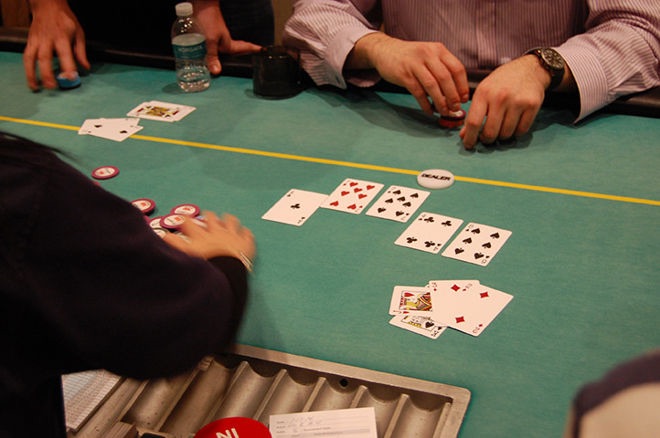
Pot Limit Omaha is a community card poker game similar to Texas Hold’em.
Each player receives four hole cards instead of two. Five community cards are then dealt on the board using the familiar flop, turn, and river format.
Here is the rule every new Omaha player must remember:
You must use exactly TWO cards from your hand and exactly THREE cards from the community board.
Not one card from your hand.
Not three cards from your hand.
Exactly two.
This rule creates plenty of confusion for Hold’em players making the move to Omaha.
For example, if four hearts are showing on the board and you hold only one heart in your hand, you do not have a flush. You must use two hole cards to complete your five-card poker hand.
Learn this rule before you learn anything else about PLO.
Why Is It Called Pot Limit Omaha?
Unlike No Limit Texas Hold’em, you cannot simply shove your entire stack into the middle whenever you want.
The maximum bet or raise is determined by the size of the pot.
This is why the game is called Pot Limit Omaha.
Don’t worry if calculating a pot-sized raise seems confusing at first. In a live poker room, you can simply announce “pot” and the dealer will calculate the correct maximum raise.
The pot-limit structure may sound like it controls the action.
It doesn’t.
PLO pots can grow incredibly fast.
Starting Hand Selection Is Critical in PLO
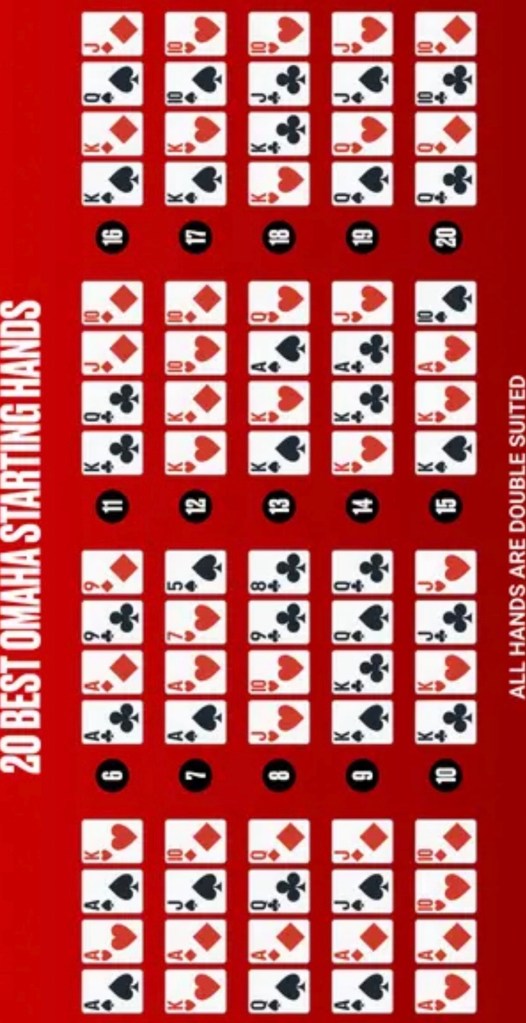
One of the biggest mistakes new Omaha players make is playing too many hands.
Four cards look exciting.
You look down at your hand and immediately start imagining straights, flushes, and full houses.
But not all four-card combinations are created equal.
The best PLO starting hands contain cards that work together.
Hands such as:
A-A-K-Q double suited
A-A-J-10 double suited
K-Q-J-10 double suited
J-10-9-8 double suited
These hands have multiple ways to connect with the flop.
Compare that to a hand like:
K-8-5-2 rainbow
Yes, you have four cards.
Unfortunately, those four cards have very little connection.
The Player in Seat 4 rule for beginners is simple:
Play four cards that work together—not four cards that simply look playable.
Double-Suited Hands Are Powerful
You will often hear Omaha players describe a hand as double suited.
This means your four-card hand contains two different suited combinations.
For example:
A♠ K♠ J♥ 10♥
You now have two possible flush draws along with straight possibilities.
Double-suited hands are valuable because they give you multiple ways to make strong hands.
But remember—making a flush isn’t always enough in Omaha.
You should constantly be thinking about the nut flush.
In Pot Limit Omaha, Draw to the Nuts
This may be the most important strategy adjustment for Texas Hold’em players.
In Hold’em, a king-high flush can be an incredibly strong hand.
In Omaha?
It might cost you your entire stack.
With four hole cards dealt to every player, opponents have far more combinations available. Strong hands appear much more frequently.
When you are drawing to a flush, ask yourself:
Am I drawing to the best possible flush?
When you are drawing to a straight, ask:
Could someone make a higher straight?
PLO punishes players who repeatedly make the second-best hand.
The second nut flush looks beautiful right up until someone turns over the ace-high flush.
If you enjoyed this post please like, share, comment and subscribe! Please click on our sponsor links to help keep this poker source free. Thanks for reading and I’ll see you at the tables!

Is 4-Betting Just a Setup to Shove All-In?

In my last post we discussed 3 betting in 2026, what about the 4 bet? If you’ve played enough No-Limit Texas Hold’em, you’ve probably seen the action go raise, 3-bet, and then 4-bet. At lower stakes, many players assume that a 4-bet automatically means someone is committed to getting all of their chips into the middle. But is a 4-bet really just a setup to shove all-in? The answer is: not always.
What Is a 4-Bet?
A 4-bet is the fourth aggressive action before the flop. For example, Player A opens the pot, Player B 3-bets, and Player A responds with a 4-bet. This move is usually made with a very strong hand, but experienced players also include well-timed bluffs in their 4-betting range to stay balanced.
Does a 4-Bet Mean You’re Pot-Committed?
In many $1/$2 and $2/$5 cash games, a large 4-bet often leaves only a pot-sized bet remaining. That means both players may already be committed to the hand, making an all-in shove on the next action very common. However, stack depth matters. With 200 big blinds or more, skilled players can sometimes 4-bet and still fold if faced with overwhelming aggression from an opponent who only continues with premium hands.
When Should You 4-Bet?

The best 4-bets are made for value with premium hands like AA, KK, QQ, and AK against aggressive opponents. Occasionally, adding hands like suited wheel aces (A5s or A4s) as bluffs can make your strategy harder to exploit. The key is understanding your opponent. Against players who only 3-bet monsters, bluff 4-betting is usually a losing play. Against aggressive regulars who 3-bet frequently, well-timed 4-bets can be extremely profitable.
Final Thoughts
A 4-bet is often a step toward playing for stacks, but it isn’t automatically a commitment to shove all-in. Your stack size, your opponent’s tendencies, position, and table dynamics should all influence your decision. Great poker players don’t 4-bet simply because they have a strong hand—they 4-bet because it’s the most profitable play in the situation.
Whether you’re grinding your local $1/$2 cash game or battling tougher $2/$5 players, understanding when a 4-bet is for value, when it’s a bluff, and when it leads to an all-in confrontation will make you a far more dangerous opponent at the table.
If enjoyed this article please like, share, comment and subscribe. Thanks for reading and see you at the tables!
Who you calling a Nit??

The Nit: Poker’s Most Predictable Player — and How to Exploit Them
If you’ve played any amount of live or online poker, you’ve met the nit. They fold endlessly, avoid marginal spots, and only enter pots with the top 5–8% of hands. They’re predictable, cautious, and terrified of making a mistake.
That makes them one of the most profitable player types to exploit.
This article breaks down what defines a nit, why they play this way, and the exact strategies you can use to beat them in cash games and tournaments.
What Is a Nit?
A nit is a player who:
- Plays extremely few hands
- Avoids marginal or uncomfortable spots
- Rarely bluffs
- Only shows aggression with premium holdings
- Folds to pressure at the slightest sign of danger
Their entire game is built around hand strength, not situation, position, or pressure. If they’re in the pot, they usually have it. If they face heat, they usually fold.
Why Nits Play This Way
Understanding their mindset helps you exploit them.
Nits are often:
- Risk‑averse
- Results‑oriented
- Uncomfortable post‑flop
- Bankroll‑conscious
- Stuck in old-school ABC thinking
Their fear of making a mistake becomes the biggest mistake in their game.

How to Exploit Nits in Cash Games
- Steal Their Blinds Relentlessly
Nits defend their blinds far too infrequently. Raise their blinds with a wide range: suited kings, suited queens, any ace, broadways, and most suited connectors. You’ll profit simply by attacking their refusal to defend.
- Continuation Bet Until They Prove Otherwise
Nits fold to c-bets at a high frequency. On dry, uncoordinated, ace-high, or king-high boards, fire the c-bet. They’ll fold everything except strong top pairs or better.
- Value Bet Thinly
This is where the real money comes from. Nits don’t check-raise light, so you can value bet:
- Second pair with a good kicker
- Top pair with a mediocre kicker
- Overpairs on safe boards
- Strong top pairs on most runouts
If they raise, you can fold immediately. They’re not bluffing.
- Don’t Bluff Them on the River
Nits fold too much early in the hand, but once they call flop and turn, they’re committed. If a nit calls twice, they have a real hand. Save your chips.
How to Exploit Nits in Tournaments
- Abuse Them on the Bubble
Nits are terrified of busting before the money. Raise their blinds, re-raise their opens, and apply ICM pressure. They’ll fold hands they should be shoving.
- Attack Them When They’re Short
A nit with 10–15 big blinds is a dream target. They’ll fold hands like A7, KJ, QTs, and 55 that competent players shove. Open wide into them and call their shoves tight.
- Don’t Pay Them Off When They Finally Play Back
If a nit 3-bets you in a tournament, they have a monster. Fold and move on. You’ll get their chips later when they blind down.
Advanced Exploits for Maximum Profit
- Over-Fold When They Show Strength
If a nit check-raises, 3-bets, double barrels, or shoves the river, they have it. Save your chips for softer spots.
- Use Polarized Lines to Pressure Them
Nits hate uncertainty. Overbet rivers, check-raise flops, and triple barrel scare cards. They’ll fold everything except the top of their range.
- Target Them When You’re Deep Stacked
Deep stacks magnify their fear of playing big pots without the nuts. Apply pressure and force them into uncomfortable situations. Most pots will go uncontested.
The Bottom Line

Nits are the most predictable players at the table. They’re easy to read, easy to pressure, and easy to extract value from.
Your strategy against nits is simple:
- Steal relentlessly
- C-bet often
- Value bet thin
- Don’t bluff rivers
- Fold when they show aggression
Play this way consistently, and nits become one of your most reliable profit sources.
If you enjoyed this article please like, share, comment and subscribe! Thanks for reading and I’ll see you at the tables.




 THE PLAYER IN SEAT 4..
Recent Comments