Archive
🃏 Hand of the Day: Pocket Aces Go Unchallenged on the Turn
Hand of the Day: Pocket Aces Turn Shove Wins Without a Showdown
There are few better starting hands in Texas Hold’em than pocket aces.
But getting dealt AA is only the beginning. The real challenge is figuring out how to get maximum value while protecting yourself when the board starts getting dangerous.
Today’s Hand of the Day is a great example.
I picked up A♠A♥ and watched the action develop.
The first player raised to $20.
A second player made it $40.
When the action got to me, I decided to flat call.
We went to the flop three-handed.
Pre-Flop
Player 1: $20
Player 2: Raises to $40
Hero: Calls $40 with pocket aces
The flop came:
9♣ 6♦ 4♥
Not a bad flop for pocket aces.
There wasn’t an immediate flush draw, although the connected cards created some straight possibilities.
The first player to act bet $60.
The second player called.
I looked down at my pocket aces and decided to flat call again.
At this point, I wasn’t interested in blowing up the pot unnecessarily. I was happy to allow my opponents to continue putting money into the middle.
Flop Action
Player 1: Bets $60
Player 2: Calls $60
Hero: Calls $60
Then came the card that changed the hand.
5♣
The board was now:
9♣ 6♦ 4♥ 5♣
Suddenly, the board was much more dangerous.
Straight possibilities were developing, and the second club created potential flush draws.
The original bettor fired another $60.
The next player called.
Now the action was back to me.
I had a decision.
Call?
Raise?
Or put maximum pressure on both players?
I chose the third option.
ALL IN.
I shoved my entire stack into the middle.
The Tank
Both players went into the tank.
And the second player really went into the tank.
Approximately five minutes.
That’s a long time to make a poker decision.
Eventually, both players folded.
The pot was mine.
No showdown.
No river.
No sweat.
The One-Ace Reveal
After both players folded, I decided to show one ace.
Then I mucked the other.
They never got to see the complete hand.
Sometimes in poker, you don’t have to show the whole story.
You just have to tell enough of it.
What Can We Learn From This Hand?
1. Don’t Automatically Slow Down With AA
Pocket aces are the best starting hand in Texas Hold’em, but they aren’t invincible.
The board changes.
Your opponents’ ranges change.
And your strategy needs to change with them.
2. Pay Attention to Turn Cards
The 5♣ wasn’t necessarily a terrible card for pocket aces, but it made the board considerably more connected.
Straight draws and flush draws were now much more relevant.
Giving opponents another cheap card wasn’t particularly appealing.
3. Sometimes Calling Is Better Early
Pre-flop, I could have put in another raise.
On the flop, I could have raised the $60 bet.
Instead, I called.
That kept my opponents involved and allowed them to continue betting.
Then, when the board became more dangerous, I changed gears.
4. Put Difficult Decisions on Your Opponents
The all-in shove forced both players to make a major decision.
They had already invested money.
They had draws and potential made hands to consider.
But now they had to risk their entire stack.
Neither player was willing to do it.
That’s the power of pressure in poker.
The Final Verdict
Pocket aces.
Three players to the flop.
9♣ 6♦ 4♥.
5♣ turn.
Two bets and a call.
Then the shove.
Both opponents folded.
One opponent tanked for five minutes before finally letting the hand go.
And pocket aces never had to see a river.
Hand of the Day Takeaway
Don’t fall in love with your starting hand.
Pocket aces may be the best starting hand in poker, but good players don’t just play their cards — they play the board, the betting action and their opponents.
Sometimes the best way to win with pocket aces isn’t to show them at showdown.
Sometimes it’s to make everyone else fold.
That’s exactly what happened here.
Starting Hand: ⭐⭐⭐⭐⭐
Flop: ⭐⭐⭐⭐⭐
Turn: ⚠️ Dangerous
Decision: 💥 All-in
Result: 🏆 Everyone folds
Showdown: None needed
Would you have shoved the turn, or would you have just called?
If you enjoyed this article please like, share, comment and subscribe. Please click on our sponsor links to keep this blog free. Thanks for reading and I’ll see you at the tables.

Atlantic City trip to Tropicana: August 2026 Day 1
So it’s Dukes birthday and we decided to go to the beach for a few days and river tubing and why not spend a couple days in AC? My amazing wife found an outdoor bounce park on the bay in Margate so all of our kids decided to go! They haven’t really been to AC before so we booked at Tropicana, it’s my new favorite and probably the most Children friendly in my opinion!
We visit Cesar’s properties quite a bit so we were able to get 2 rooms for 2 nights for about $200 since even though we receive comped rooms you still need to cover the taxes and resort fees.
When arrived at 200 we were ready to check in, took like 15 minutes because I wanted to hit the desk and ensure rooms that were adjoining if possible. Otherwise it takes almost seconds with their quick kiosks!
We dropped off our bags and freshened up great ocean view and headed to get something to eat. Tropicana has a great selection of restaurants and an afford court, so it’s actually exciting just to eat! They have Carmines, PF Changs, other high end choices and tucked away I think is the last “Good “ Hooters, several food court choices and my favorite Casa and Tequila Bar! I think my children were overwhelmed so after an eternity of discussion we all agreed on Taco and Tequila. It’s close to the boardwalk and they wanted to explore! Meal as usual was fantastic and the service was great only issue is we can’t get reward points from eating there.


We took the kids on to the boardwalk checked out the beach stopped for candy at Sugar and walked as far as they wanted till their feet hurt and needed to tram car back!

We got back to the room about 930pm and I decided it was time to play cards. Since Tropicana is one of the few places left with a poker room I decided to play there! Great time great action and good play. I made a few bad decisions early actually I got called by a couple of worse hands that hit but sometimes that’s the game and was down to about $70 from my $240 start. I later hit some great hands. Doubled up with jacks then almost tripled up from a huge hand with big raises till I shoved with Rockets after the turn opponent bet out $60, a caller behind him and I shoved putting them both in the tank, one for 5 minutes obv both were on big draws. I ended up leaving at 200m with about $500 bucks as the game started to slow up.


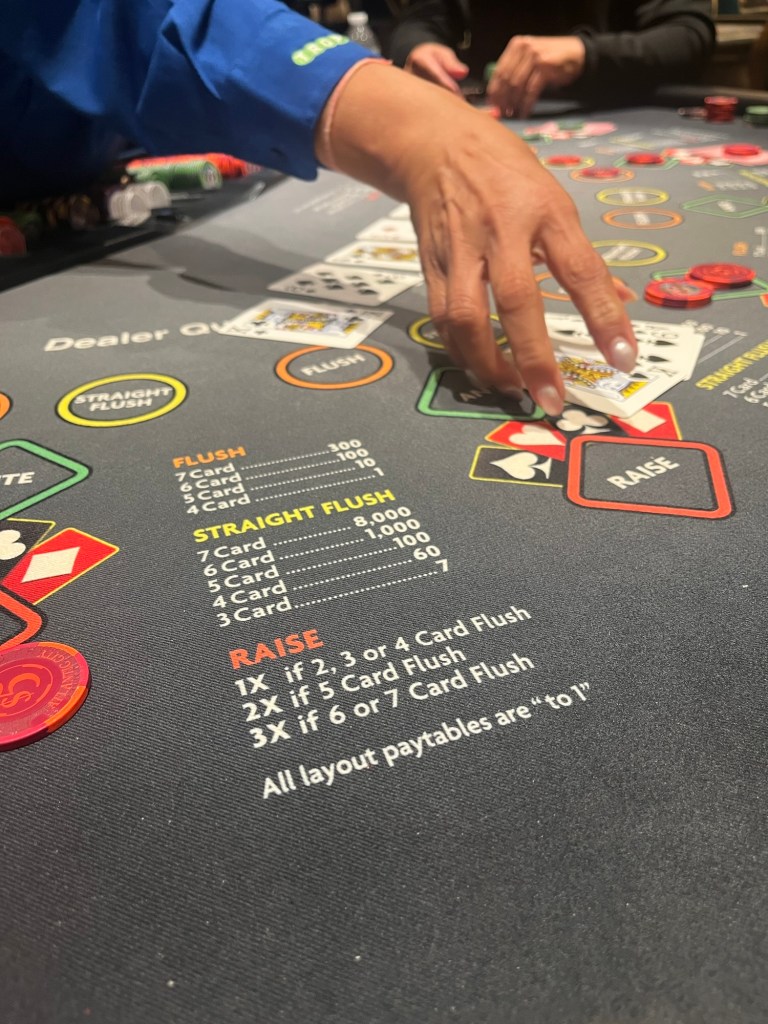
I decided it was time to head to the room but unfortunately for me I walked through the table games! I bought in for $300 on Top Flush and after an hour I had busted, telling me it was definitely bed time. I couldn’t hit a hand to save my life!
Day 2 publishing soon. If you enjoyed this article please like, share, subscribe, comment. Please click on our sponsor links to help keep our blog free! Thanks for reading and I’ll see you at the tables!
Texas Holdem VS. Pot Limit Omaha!
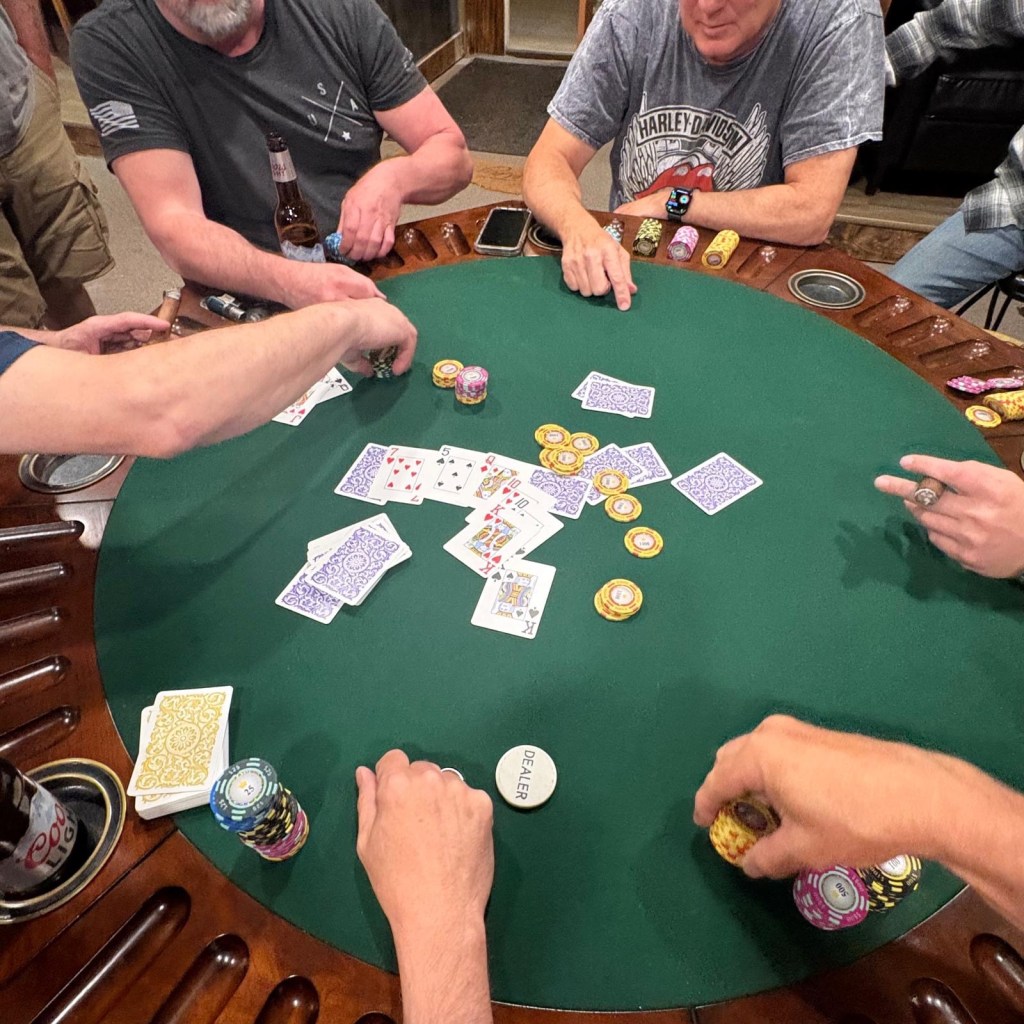
Walk into almost any poker room today, and you’ll find two games dominating the action: Texas Hold’em and Pot Limit Omaha (PLO).
Both games use community cards. Both require skill, patience, and strategy. Yet the similarities stop there.
While Texas Hold’em is known for calculated aggression and straightforward hand reading, Pot Limit Omaha is a game of massive draws, big pots, and constant action.
So which game is right for you?
Let’s compare the two and see what makes each unique.
Texas Hold’em: The World’s Most Popular Poker Game
Texas Hold’em remains the most popular poker variant in the world—and for good reason.
Each player receives two private hole cards, followed by five community cards. Players make the best five-card hand using any combination of those cards.
Hold’em is easy to learn but incredibly difficult to master.
It rewards patience, discipline, position, and strong decision-making.
For beginners, Texas Hold’em is usually the best place to start because the rules are simple and hand values are easier to understand.
Pot Limit Omaha: More Cards, More Action
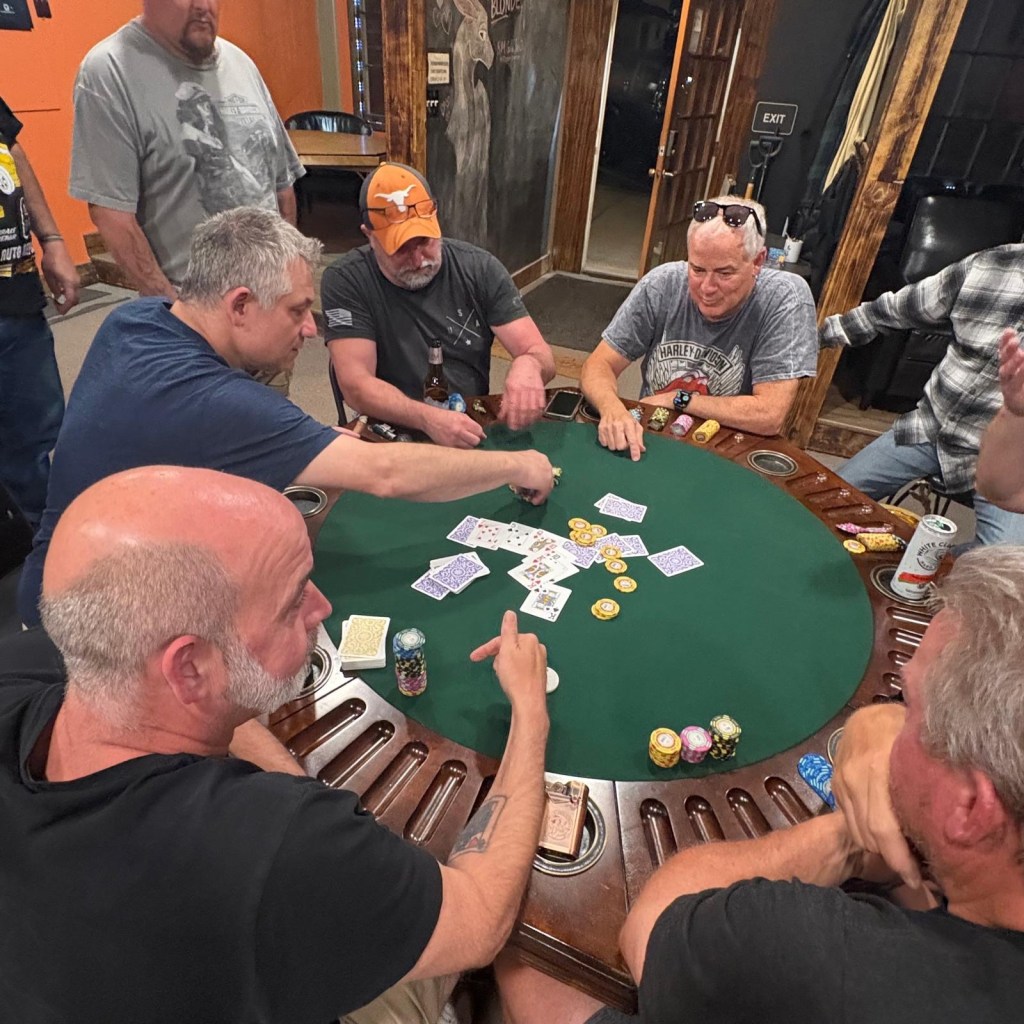
Pot Limit Omaha raises the excitement immediately.
Instead of two hole cards, every player receives four hole cards.
However, there’s one rule every new player must remember:
You must use exactly two of your hole cards and exactly three community cards to make your final hand.
That single rule changes everything.
Because players have four hole cards, they make stronger hands much more often than in Hold’em.
Straights, flushes, full houses, and monster combination draws become common.
If you enjoy action, you’ll probably love PLO.
Starting Hands Matter Differently
In Texas Hold’em, premium starting hands like pocket Aces, Kings, and Ace-King dominate before the flop.
In Pot Limit Omaha, premium hands are built around coordination.
The strongest PLO hands contain connected cards, suited cards, and multiple ways to improve after the flop.
For example:
Strong Hold’em Hand
● A♠ A♥
Strong PLO Hand
● A♠ A♦ K♠ Q♦ (double suited)
Notice the difference?
In Omaha, all four cards need to work together.
Big Hands Happen More Often
One of the biggest shocks for Hold’em players is how often huge hands appear in Omaha.
Top pair that wins comfortably in Hold’em is often worthless in PLO.
Even top set can become vulnerable on coordinated boards.
The winning hand in Omaha is frequently the nuts—the best possible hand.
If you consistently chase second-best hands, Omaha will quickly teach you an expensive lesson.
Betting Structures
Texas Hold’em is most commonly played as No-Limit Hold’em, allowing players to bet all of their chips at any time.
Pot Limit Omaha uses a different betting structure.
The maximum bet is the size of the current pot.
This changes strategy significantly.
Instead of relying on all-in pressure, PLO players focus on building pots, maximizing value, and making disciplined decisions over multiple betting streets.
Variance: Prepare for Bigger Swings
Both games have variance.
Pot Limit Omaha simply has more of it.
Because draws often have substantial equity against made hands, even favorites lose more frequently than many Hold’em players expect.
That doesn’t mean Omaha is luck-based.
It means bankroll management becomes even more important.
Successful PLO players understand that short-term swings are part of the game.
Which Game Requires More Skill?

Poker players have debated this question for years.
Texas Hold’em places a premium on reading opponents, understanding ranges, bluffing, and extracting value with thinner edges.
Pot Limit Omaha demands exceptional hand selection, board reading, equity evaluation, discipline, and an understanding of complex post-flop situations.
Neither game is “easy.”
They simply challenge different poker skills.
The best players often study and enjoy both.
Which Game Should You Play?
Choose Texas Hold’em if you:
● Prefer a slower, more strategic pace.
● Enjoy bluffing and reading opponents.
● Are new to poker.
● Want the widest variety of games and tournaments.
Choose Pot Limit Omaha if you:
● Love action-packed poker.
● Enjoy drawing hands and complex decisions.
● Like deeper post-flop strategy.
● Don’t mind larger bankroll swings.
Many players begin with Hold’em before adding Omaha to their skill set, giving them a broader understanding of poker strategy.
Final Thoughts from The Player in Seat 4
Texas Hold’em and Pot Limit Omaha are both fantastic games, but they reward different approaches.
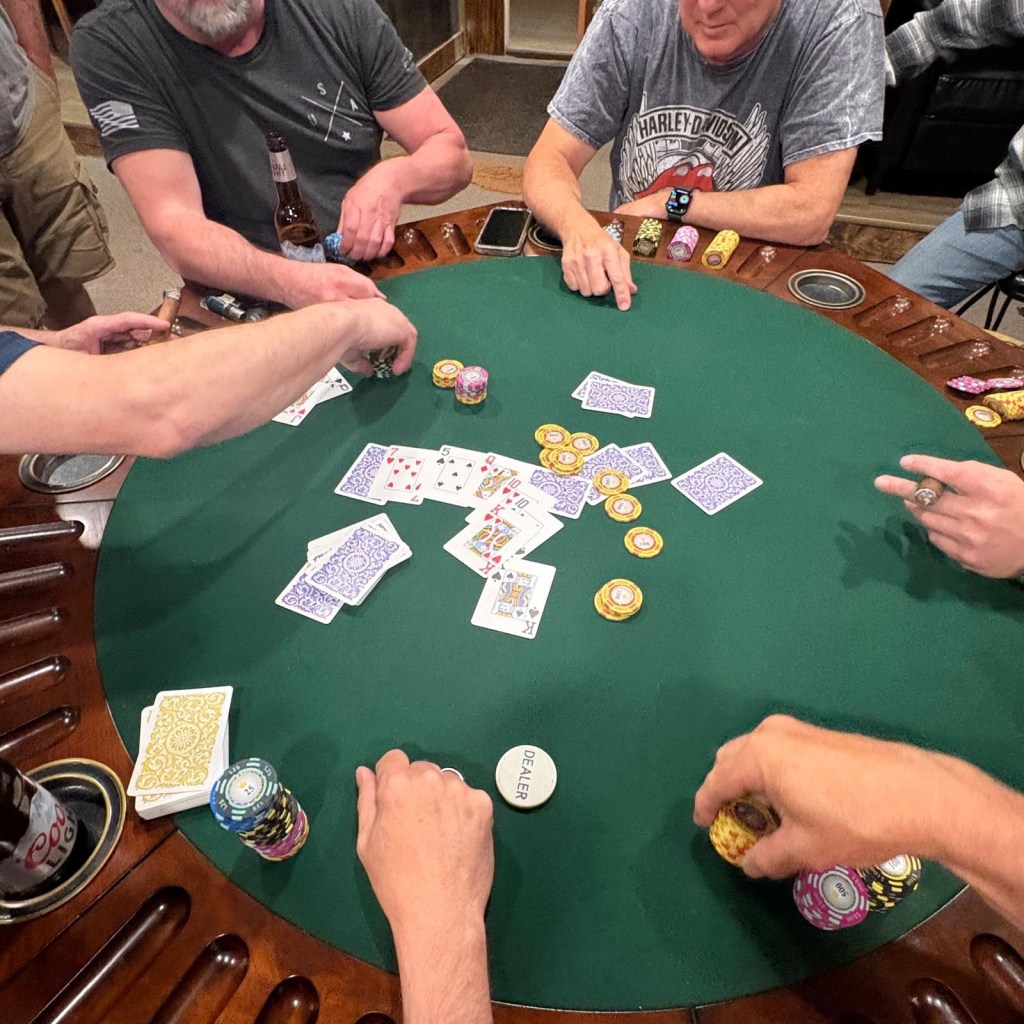
Hold’em is often a game of patience, precision, and calculated aggression.
Pot Limit Omaha rewards coordinated starting hands, nut potential, position, and disciplined post-flop play.
If you’ve never tried PLO, give it a chance. Just don’t expect your Hold’em instincts to translate perfectly.
The players who adapt, continue learning, and respect the differences between the two games are usually the ones stacking chips at the end of the night.
Whether you’re grinding a $1/$2 cash game, chasing tournament glory, or simply looking to improve your overall poker skills, learning both formats will make you a more complete player.
Key Takeaways
● Texas Hold’em uses 2 hole cards; Pot Limit Omaha uses 4 hole cards.
● In PLO, you must use exactly 2 hole cards and 3 community cards.
● Omaha produces stronger hands and larger pots more often.
● Hold’em rewards patience and reading opponents.
● PLO rewards coordinated hands, nut potential, and disciplined post-flop decisions.
● Mastering both games will strengthen your overall poker success
If you enjoyed this article please like, share, comment and subscribe. Please take a second and click on our advertiser links to keep these articles free. Thanks for reading and I’ll see you at the tables!

Is 4-Betting Just a Setup to Shove All-In?
In my last post we discussed 3 betting in 2026, what about the 4 bet? If you’ve played enough No-Limit Texas Hold’em, you’ve probably seen the action go raise, 3-bet, and then 4-bet. At lower stakes, many players assume that a 4-bet automatically means someone is committed to getting all of their chips into the middle. But is a 4-bet really just a setup to shove all-in? The answer is: not always.
What Is a 4-Bet?
A 4-bet is the fourth aggressive action before the flop. For example, Player A opens the pot, Player B 3-bets, and Player A responds with a 4-bet. This move is usually made with a very strong hand, but experienced players also include well-timed bluffs in their 4-betting range to stay balanced.
Does a 4-Bet Mean You’re Pot-Committed?
In many $1/$2 and $2/$5 cash games, a large 4-bet often leaves only a pot-sized bet remaining. That means both players may already be committed to the hand, making an all-in shove on the next action very common. However, stack depth matters. With 200 big blinds or more, skilled players can sometimes 4-bet and still fold if faced with overwhelming aggression from an opponent who only continues with premium hands.
When Should You 4-Bet?

The best 4-bets are made for value with premium hands like AA, KK, QQ, and AK against aggressive opponents. Occasionally, adding hands like suited wheel aces (A5s or A4s) as bluffs can make your strategy harder to exploit. The key is understanding your opponent. Against players who only 3-bet monsters, bluff 4-betting is usually a losing play. Against aggressive regulars who 3-bet frequently, well-timed 4-bets can be extremely profitable.
Final Thoughts
A 4-bet is often a step toward playing for stacks, but it isn’t automatically a commitment to shove all-in. Your stack size, your opponent’s tendencies, position, and table dynamics should all influence your decision. Great poker players don’t 4-bet simply because they have a strong hand—they 4-bet because it’s the most profitable play in the situation.
Whether you’re grinding your local $1/$2 cash game or battling tougher $2/$5 players, understanding when a 4-bet is for value, when it’s a bluff, and when it leads to an all-in confrontation will make you a far more dangerous opponent at the table.
If enjoyed this article please like, share, comment and subscribe. Thanks for reading and see you at the tables!
Hand of the day: Pocket Aces walk into a Diamond Storm!

Some poker hands unfold slowly. Others explode instantly. Today’s $1/$2 cash‑game hand is the kind of cooler that reminds us how even the strongest starting hand in Hold’em can be helpless when the board decides otherwise.
Preflop
Hero picks up A♠ A♥ and raises to $25, a strong sizing that isolates and builds the pot. Villain calls in position with K♦ Q♦, a suited Broadway hand that plays beautifully with deep stacks.
Flop: A♦ 9♦ 8♦
The flop is a disaster disguised as a dream.
Hero flops top set.
Villain flops the nut flush.
On a monotone board like this, sets are still extremely strong, and many worse hands can continue. Hero shoves all‑in, looking to deny equity and get value from dominated holdings. Villain snap‑calls with the nuts.
Runout
The turn and river brick out. K♦ Q♦ holds, and the pot slides to Villain.
Takeaways
- Pocket aces are powerful preflop, but monotone boards can flip the script instantly.
- Sets remain strong holdings, and jamming isn’t a mistake here — it’s simply a cooler.
- Suited Broadway hands in position can apply enormous pressure and realize equity well.
- Sometimes the deck writes a tragedy, and all you can do is turn the page.
Aces Cracked Again??

Pocket Aces in Early Position: How to Play Them in a $1/$2 Cash Game (and How Often They Lose)
Pocket Aces.
The best starting hand in Texas Hold’em.
And yet, the hand that somehow creates the most fear—especially in early position at a $1/$2 cash game.
If you’ve ever raised UTG with A♠ A♦, gotten multiple callers, and then watched a random two pair or straight crack your aces, you’re not alone. In fact, understanding how often pocket aces lose is the key to playing them profitably and emotionally correctly in low-stakes live poker.
Let’s break it down.
Why Pocket Aces Feel Tricky in Early Position
In a $1/$2 live cash game, early position (UTG, UTG+1) is dangerous for one simple reason:
👉 You’re almost guaranteed to get callers.
Live low-stakes games are:
Loose Passive Curious
When you raise with pocket aces from early position, players behind you aren’t folding hands they “want to see a flop with.” Suited connectors, small pairs, and offsuit junk all come along—often at bad prices.
That means:
More opponents More chances for someone to out-flop you More stress postflop
How Often Do Pocket Aces Actually Lose?
Here’s the reality many players don’t want to hear:
Pocket aces win about 85% of the time heads-up Against two opponents, that drops closer to ~73% Four or five opponents? You’re closer to 55–60%
So yes—aces lose far more often in multiway pots, which is exactly what early position creates in $1/$2 games.
That doesn’t mean aces are bad.
It means your expectations need to match reality.
The Biggest Mistake with Aces at $1/$2
The most common error isn’t preflop—it’s emotional.
Many players:
Overvalue one pair Feel “entitled” to win with aces Refuse to fold when the board becomes dangerous
Remember:
Pocket aces are just one pair after the flop.
If the board comes:
Highly connected Extremely wet Paired in a way that favors calling ranges
…you must be willing to slow down or even fold.
Winning players don’t ask, “Do I have aces?”
They ask, “What does my opponent’s range look like now?”
How to Play Pocket Aces in Early Position (Correctly)
1. Raise Bigger Than Usual
In $1/$2 games, standard opens often aren’t enough.
If the table is loose, consider 5–7x opens Charge the limpers and speculative hands Your goal is fewer opponents, not “balance”
2. Expect to Get Called
Even big raises won’t always isolate.
Plan for multiway pots and play cautiously postflop.
3. Don’t Overplay One Pair
If you’re facing:
Heavy turn aggression Multiple callers on dangerous boards Check-raise from a passive player
…believe them more often than not.
4. Focus on Long-Term Profit, Not Single Hands
Aces losing doesn’t mean you misplayed them.
It means variance exists, especially live.
Why Pocket Aces Still Print Money at $1/$2
Despite the heartbreak stories, pocket aces are still massively profitable because:
Players call too wide preflop They pay off too much postflop They don’t fold second-best hands
Your job isn’t to win every time—it’s to consistently extract value when ahead and minimize losses when behind.
That’s how aces make money.
Final Thoughts: Embrace the Truth About Aces
Pocket aces are powerful—but not invincible.
In early position at a $1/$2 cash game:
Expect action Expect variance Expect to lose sometimes
When you stop being surprised by aces getting cracked, you start playing them better—and your bankroll will thank you.
Play them strong. Play them smart. And don’t let one bad beat define your session.

If you liked this article please click like, or share or even subscribe. See you at the tables!

 THE PLAYER IN SEAT 4..
Recent Comments