Archive
How to Study Poker and Improve Your Game: A Complete Guide for Serious Players
If you’ve ever wondered why some poker players consistently win while others struggle to break even, the answer often comes down to study habits. While experience at the tables is important, the most successful players dedicate time away from the felt to improving their skills. Whether you’re grinding $1/$2 cash games, playing $2/$5 No-Limit Hold’em, or entering poker tournaments, learning how to study poker effectively can dramatically increase your win rate.
Why Studying Poker Matters
Poker is a game of skill, strategy, and continuous adaptation. The players who consistently profit are usually those who spend time analyzing hands, learning new concepts, and correcting mistakes. Simply playing more hours isn’t enough. To become a better poker player, you need a structured approach to poker study.
Review Your Poker Hands
One of the best ways to improve your poker game is by reviewing hand histories after every session. Focus on:
- Large pots won and lost
- Tough river decisions
- Bluffing opportunities
- Spots where you felt uncertain
Ask yourself if you made the most profitable decision with the information available. Over time, you’ll begin identifying recurring mistakes and leaks in your game.
Learn Strong Preflop Strategy
Many costly errors occur before the flop. Understanding proper preflop ranges can instantly improve your results.
Key areas to study include:
- Opening ranges by position
- Blind defense strategy
- 3-betting and 4-betting ranges
- Tournament push-fold charts
Strong preflop fundamentals create easier decisions on later streets and help avoid difficult situations.
Watch Poker Training Videos
Poker training videos are an excellent resource for players looking to improve. Watching experienced players explain their thought process can help you better understand:
- Hand reading
- Bet sizing
- Bluffing frequencies
- Exploitative strategies
- Game theory concepts
To maximize learning, pause the video before key decisions and determine what action you would take.
Join a Poker Study Group
Discussing hands with other players can expose you to new perspectives and strategies. Whether it’s a local poker group, an online forum, or a private study session with friends, collaboration can accelerate improvement.
When sharing hands, include:
- Stack sizes
- Positions
- Betting action
- Opponent tendencies
The goal is not just to know what happened, but to understand why a particular play was correct or incorrect.
Use Poker Software and Tools
Modern poker players have access to powerful software that can help analyze hands and improve decision-making.
Popular study methods include:
- Equity calculators
- Range analyzers
- Poker solvers
- Session tracking software
Even spending a few hours each week studying equity can significantly improve your understanding of poker mathematics and expected value.
Study Your Opponents
Live poker is often about exploiting player tendencies rather than playing perfectly balanced strategy.
Look for common player types such as:
- Calling stations
- Tight-passive players
- Loose-aggressive players
- Recreational players
Taking notes and recognizing patterns can help you make better adjustments and maximize profits.
Improve Your Mental Game
Many poker players focus entirely on strategy while ignoring the mental side of the game. However, tilt and emotional decision-making can quickly erase hours of good play.
To strengthen your mental game:
- Accept short-term variance
- Focus on decision quality
- Practice bankroll management
- Take breaks when frustrated
- Maintain realistic expectations
The ability to remain disciplined during losing sessions is often what separates winning players from losing players.
Track Your Results
Successful poker players track their performance over time. Keeping records allows you to identify strengths, weaknesses, and trends in your game.
Track:
- Hours played
- Profit and loss
- Stakes played
- Win rate
- Session notes
Accurate records provide valuable insight into your long-term progress and help keep emotions out of the equation.
Final Thoughts

Learning how to study poker effectively is one of the biggest edges a player can develop. The combination of hand reviews, preflop study, training videos, software analysis, opponent observation, and mental game work creates a foundation for long-term success.
If you’re serious about becoming a winning poker player, consider dedicating at least one hour of study for every five hours played. Over time, that investment can lead to better decisions, fewer mistakes, and increased profits at the poker table.
If you enjoyed this article please like, share, comment and subscribe. Thanks for reading and I’ll see you at the tables!

Why Playing Small Pot Poker Can Be a Big Winning Strategy
Many poker players dream of stacking opponents in massive pots, but some of the most successful long-term winners understand the value of playing small pot poker. Whether you’re grinding a $1/$2 cash game or building a bankroll online, learning how to win small and consistent pots can dramatically improve your results. Small pot poker isn’t about being passive—it’s about making smart decisions, controlling variance, and maximizing profit over time.

What Is Small Pot Poker?
Small pot poker refers to a strategy focused on keeping pots manageable when holding medium-strength hands or marginal situations. Instead of constantly building huge pots with one-pair hands or drawing hands, skilled players often choose smaller bet sizes, pot control, and selective aggression. This approach reduces risk while still allowing players to extract value from weaker opponents.
In low-stakes cash games, many recreational players make costly mistakes by overvaluing hands and chasing draws. By keeping pots smaller and forcing opponents to make difficult decisions, you can capitalize on those mistakes without exposing your stack unnecessarily.
The Benefits of Playing Small Pot Poker
One of the biggest advantages of small pot poker is reduced variance. Large pots naturally create larger swings, which can be emotionally and financially challenging. Winning several small pots each session often produces steadier profits than relying on a few huge confrontations.
Another benefit is improved decision-making. When pots remain manageable, players can make more accurate reads and avoid committing large portions of their stack with marginal holdings. This is especially valuable in $1/$2 No-Limit Texas Hold’em games, where opponents frequently make unpredictable plays.
Small pot poker also helps preserve your bankroll. By avoiding unnecessary all-ins and oversized confrontations, you protect yourself from costly mistakes while maintaining opportunities to exploit weaker players later in the session.
Small Pots Add Up Quickly
Many new players underestimate how profitable small pots can be. Winning five or six uncontested pots per hour through solid preflop raises, continuation bets, and position play can generate a significant hourly win rate. Professional poker players understand that consistent small wins often outperform high-risk, high-variance strategies over the long run.
Think of it this way: if you’re regularly picking up blinds, taking down limped pots, and extracting value from weaker hands, those chips accumulate steadily throughout a session. Poker is ultimately a game of long-term expected value, not individual hands.
Final Thoughts
While big pots make for exciting stories, small pot poker is often where real profits are made. By controlling pot size, reducing variance, and consistently capitalizing on opponent mistakes, players can develop a more sustainable and profitable poker strategy. The next time you’re tempted to inflate a pot with a marginal hand, remember that small pots won consistently can lead to big results over time.
If you’re looking to improve your poker game, mastering small pot poker strategy may be one of the most valuable skills you can add to your arsenal.
Poker Lingo used in 2026!

I’m often asked what some of the lingo, or acronyms I use in my articles mean, I take for granted that I’ve been playing, studying poker for several years now. So using my AI partners tried to compile a glossary of commonly used terms that would help other players at different levels understand better. I’m sure this isn’t everything so if you have additional questions please let me know!
Poker Lingo Glossary 2026: Essential NLHE Tournament Terms Every Player Needs
Are you new to poker or looking to sharpen your game in 2026? Understanding poker lingo is one of the fastest ways to improve your No-Limit Hold’em (NLHE) tournament strategy. Whether you’re defending your big blind, navigating ICM pressure on the bubble, or studying GTO ranges, knowing the right terms helps you think and talk like a pro.
This updated poker glossary focuses on modern MTT (Multi-Table Tournament) language. It’s perfect for beginners and intermediate players alike.
Why Learning Poker Terms Matters in 2026
Poker strategy has never been more solver-driven. With tools like GTO Wizard and advanced training software, players throw around terms like “fold equity,” “blockers,” and “ICM” constantly. Mastering this vocabulary improves your hand reading, table talk, and overall expected value (EV).
Let’s break down the most important poker lingo used in NLHE tournaments today.

Core Game and Structural Terms
• NLHE / NL: No-Limit Hold’em – the world’s most popular poker format where you can bet all your chips at any time.
• MTT: Multi-Table Tournament. Events with hundreds or thousands of players that pay out based on finishing position.
• BB (Big Blind): The larger forced bet. Also refers to the position that posts it (a key spot for defending).
• SB (Small Blind): The smaller forced bet to the left of the big blind.
• Ante: A forced bet posted by every player, common in later stages to speed up play and build bigger pots.
• Effective Stack: The shortest stack at the table, measured in big blinds. This heavily influences strategy.
Key Poker Positions
• UTG (Under the Gun): First player to act preflop – the toughest position.
• Cutoff (CO): Seat immediately right of the Button. Strong stealing position.
• Button (BTN): Dealer position. Best seat at the table as you act last postflop.
• OOP (Out of Position): Acting first on one or more streets (common when defending the big blind).
• IP (In Position): Acting after your opponent – a major advantage.
Strategy and Math Concepts
• EV (Expected Value): The long-term profitability of a play in chips or dollars. +EV = profitable over time.
• ICM (Independent Chip Model): Converts chip stacks into real-money equity based on payouts. Critical near pay jumps and final tables.
• GTO (Game Theory Optimal): An unexploitable baseline strategy solved by computers. Many players study GTO ranges in 2026.
• Pot Odds: Ratio of the pot size to the cost of calling. Essential when deciding whether to defend your big blind.
• Implied Odds: Potential to win more chips later if you hit your hand.
• Fold Equity: The value of making your opponent fold when you bet or raise.
Common Actions and Plays
• Open (Open Raise): The first raise preflop.
• 3-Bet: Re-raising preflop. A key weapon when defending the big blind.
• Flat / Call: Matching the current bet without raising.
• Defend: Calling or 3-betting from the blinds against a raise.
• Steal: Raising light from late position to win the blinds and antes.
• Squeeze: 3-betting after an open and call(s) to apply maximum pressure.
• Jam / Shove: Going all-in with your remaining stack.
• Muck: Folding your hand without showing it.
Player Types and Dynamics
• Nit: Extremely tight player who only plays premium hands.
• LAG (Loose Aggressive): Plays many hands and bets/raises frequently.
• TAG (Tight Aggressive): Selective but aggressive – the classic solid style.
• Fish / Whale: Recreational or weak player (your main profit source).
• Reg: Experienced regular/grinder.
• Tilt: Playing emotionally after bad beats, usually leading to mistakes.
Tournament Stage Terminology
• Bubble: One player away from the money. Play often tightens dramatically here.
• Pay Jump: Moving up payout positions and the resulting increase in prize money.
• Final Table: The last table in an MTT.
• Chip EV: Playing as if chips equal real money (early tournament or cash game mindset).
• ICM Pressure: Adjusting strategy based on payout implications.
Hand Notation and Other Slang
• AKs: Ace-King suited.
• 76s: Seven-Six suited (a classic suited connector).
• Broadway: High cards (A-K-Q-J-10) that can make the nut straight.
• Suited Connectors: Consecutive same-suit cards (great for big blind defense).
• Blockers: Holding key cards that reduce the chance your opponent has a specific hand.
• Cooler: When two very strong hands clash unavoidably.
• Bad Beat: Losing a big pot with a strong hand to a statistically unlikely one.
How to Use This Poker Glossary
Print this out or bookmark it as your go-to poker terms reference. When you read a strategy article about defending your big blind, you’ll now understand why pot odds, effective stack depth, and ICM all matter.
Pro tip: The biggest EV gains often come from late-position steals and proper big blind defense. Combine this vocabulary with solid range construction and you’ll quickly move up in stakes.
Final Thoughts
Poker lingo in 2026 is more solver-influenced than ever, but the fundamentals remain the same. Master these terms and you’ll feel more confident at the tables, in training videos, and in discussions with other players.
If you enjoyed this article please like, comment, share and subscribe! Thanks for reading and I’ll see you at the tables!
Hand of the Day: Pocket 9s vs AK off in an ugly way.

Hand of the Day: Pocket Nines Face the High-Variance Runout in a $1/$3 Cash Game
Preflop Action: Building a Low-SPR ( Stack to pot ratio) Pot
In a $1/$3 cash game with $134 effective stacks, the cutoff opens to $10. Hero looks down at 9♣ 9♦ in the big blind and elects to apply maximum pressure with a $37 3-bet, effectively committing to the hand with only $97 behind. The table folds back to the cutoff, who makes the call with A♠ K♥, setting up a low SPR situation where postflop decisions become brutally simple.
Flop: 2♦ 4♣ 7♠ — A Dream Board for Pocket Nines
The flop comes 2♦ 4♣ 7♠, a clean, low, uncoordinated board that heavily favors Hero’s range and hand. With an SPR under 1, Hero shoves the remaining $97, putting maximum pressure on all unpaired overcard hands. The cutoff thinks briefly but calls with Ace-King high, trusting the equity of two overcards in a shallow-stacked pot.
Turn and River: The Deck Has the Final Word
The turn brings the 5♣, a total brick that keeps Hero well ahead. But the river delivers the K♣, giving the cutoff top pair and the winning hand. Hero’s pocket nines, ahead the entire way, get clipped at the finish line.
Result
Villain wins with top pair, kings, after calling off with Ace-King high and finding one of their six outs on the river.
Strategy Takeaway
This hand is a textbook example of low-SPR dynamics. Once Hero 3-bets to $37 with only $97 behind, the hand is essentially committed. On a dry 2-4-7 flop, shoving pocket nines is the correct, profitable play against the cutoff’s calling range. But when you give A-K two cards to come, sometimes it gets there. The line is sound, the shove is standard, and the result is simply poker doing what poker does.
If you enjoyed this article please like, share comment and subscribe. Thank you and I’ll see you at the tables!
Who you calling a Nit??

The Nit: Poker’s Most Predictable Player — and How to Exploit Them
If you’ve played any amount of live or online poker, you’ve met the nit. They fold endlessly, avoid marginal spots, and only enter pots with the top 5–8% of hands. They’re predictable, cautious, and terrified of making a mistake.
That makes them one of the most profitable player types to exploit.
This article breaks down what defines a nit, why they play this way, and the exact strategies you can use to beat them in cash games and tournaments.
What Is a Nit?
A nit is a player who:
- Plays extremely few hands
- Avoids marginal or uncomfortable spots
- Rarely bluffs
- Only shows aggression with premium holdings
- Folds to pressure at the slightest sign of danger
Their entire game is built around hand strength, not situation, position, or pressure. If they’re in the pot, they usually have it. If they face heat, they usually fold.
Why Nits Play This Way
Understanding their mindset helps you exploit them.
Nits are often:
- Risk‑averse
- Results‑oriented
- Uncomfortable post‑flop
- Bankroll‑conscious
- Stuck in old-school ABC thinking
Their fear of making a mistake becomes the biggest mistake in their game.

How to Exploit Nits in Cash Games
- Steal Their Blinds Relentlessly
Nits defend their blinds far too infrequently. Raise their blinds with a wide range: suited kings, suited queens, any ace, broadways, and most suited connectors. You’ll profit simply by attacking their refusal to defend.
- Continuation Bet Until They Prove Otherwise
Nits fold to c-bets at a high frequency. On dry, uncoordinated, ace-high, or king-high boards, fire the c-bet. They’ll fold everything except strong top pairs or better.
- Value Bet Thinly
This is where the real money comes from. Nits don’t check-raise light, so you can value bet:
- Second pair with a good kicker
- Top pair with a mediocre kicker
- Overpairs on safe boards
- Strong top pairs on most runouts
If they raise, you can fold immediately. They’re not bluffing.
- Don’t Bluff Them on the River
Nits fold too much early in the hand, but once they call flop and turn, they’re committed. If a nit calls twice, they have a real hand. Save your chips.
How to Exploit Nits in Tournaments
- Abuse Them on the Bubble
Nits are terrified of busting before the money. Raise their blinds, re-raise their opens, and apply ICM pressure. They’ll fold hands they should be shoving.
- Attack Them When They’re Short
A nit with 10–15 big blinds is a dream target. They’ll fold hands like A7, KJ, QTs, and 55 that competent players shove. Open wide into them and call their shoves tight.
- Don’t Pay Them Off When They Finally Play Back
If a nit 3-bets you in a tournament, they have a monster. Fold and move on. You’ll get their chips later when they blind down.
Advanced Exploits for Maximum Profit
- Over-Fold When They Show Strength
If a nit check-raises, 3-bets, double barrels, or shoves the river, they have it. Save your chips for softer spots.
- Use Polarized Lines to Pressure Them
Nits hate uncertainty. Overbet rivers, check-raise flops, and triple barrel scare cards. They’ll fold everything except the top of their range.
- Target Them When You’re Deep Stacked
Deep stacks magnify their fear of playing big pots without the nuts. Apply pressure and force them into uncomfortable situations. Most pots will go uncontested.
The Bottom Line
Nits are the most predictable players at the table. They’re easy to read, easy to pressure, and easy to extract value from.
Your strategy against nits is simple:
- Steal relentlessly
- C-bet often
- Value bet thin
- Don’t bluff rivers
- Fold when they show aggression
Play this way consistently, and nits become one of your most reliable profit sources.
If you enjoyed this article please like, share, comment and subscribe! Thanks for reading and I’ll see you at the tables.
Strategy for Calling Stations in Poker!

What Is a Calling Station in Poker? (And the Best Strategy to Beat Them)
If you play live low-stakes poker like $1/$2 or $2/$5 cash games, you’ve definitely run into the classic calling station. These players are everywhere—and if you know how to adjust, they can become one of your biggest sources of profit.
In this article, we’ll break down exactly what a calling station is in poker and the best strategy to exploit them for maximum value.
What Is a Calling Station in Poker?
A calling station is a type of poker player who calls far too often and folds far too rarely. Instead of playing aggressively, they prefer to check and call with a wide range of hands—many of which are weak.
Common Traits of a Calling Station
- Calls with weak pairs, draws, and even high cards
- Rarely folds after seeing the flop
- Almost never bluffs
- Plays passively (check/call instead of bet/raise)
In simple terms: they hate folding and are willing to “see it through” to the river.
Why Calling Stations Are Profitable
Calling stations might seem frustrating because they hit unexpected hands—but in reality, they are highly exploitable.
Why? Because poker is about making your opponents make mistakes—and calling stations make one of the biggest mistakes in the game:
Calling too much with worse hands
That means you can consistently extract value when you’re ahead.

Best Strategy to Beat a Calling Station
To win against calling stations, you need to shift your mindset. Forget fancy plays—this is about simple, disciplined, value-driven poker.
1. Value Bet Relentlessly
This is the #1 adjustment.
If you think you have the best hand, bet—and bet big. Calling stations will often pay you off with worse hands.
Examples of hands to value bet:
- Top pair (good kicker)
- Overpairs
- Two pair or better
Pro tip: Don’t get tricky. If they’re calling, keep charging them.
2. Stop Bluffing (Almost Completely)
Bluffing a calling station is one of the fastest ways to lose money in poker.
- They don’t fold enough
- They call “just to see it”
- Even scary board cards won’t always work
Rule: If your strategy relies on them folding, rethink it.
3. Use Bigger Bet Sizes
Against strong players, you balance your bet sizing. Against calling stations, you exploit.
Since they call too much:
- Increase your bet sizes (60%–100% pot or more)
- Charge their draws heavily
- Build bigger pots when you’re ahead
You’re not trying to be balanced—you’re trying to get paid.

4. Play Tighter Preflop
You want to go to showdown with strong, value-heavy hands.
Avoid:
- Weak suited connectors (especially out of position)
- Marginal hands that make weak pairs
Focus on hands that can make:
- Top pair with a strong kicker
- Overpairs
- Strong draws with equity
5. Don’t Slow Play Your Big Hands
Slow playing is a mistake against calling stations.
Why?
- They’re already calling too much
- You risk missing value
- You give free cards that can beat you
Instead, bet your strong hands immediately and often.
6. Stay Patient and Emotionally Disciplined
Calling stations will:
- Hit lucky draws
- Catch miracle river cards
- Occasionally crack your premium hands
That’s part of the game.
The key is understanding:
You’re making money long-term by getting called by worse hands
Stick to your strategy and avoid tilt.
Winning Mindset Against Calling Stations
Against skilled opponents, poker is about balance and deception.
Against calling stations, it’s much simpler:
- Bet when you’re ahead
- Don’t bluff when you’re behind
- Charge them as much as possible
Final Thoughts
If you’re playing live low-stakes poker, learning how to beat calling stations is essential. These players are not your enemy—they’re your opportunity.
Master this one adjustment—value betting relentlessly—and you’ll see a noticeable increase in your win rate.
If you enjoyed this article please like, share, comment and subscribe. Thanks for reading and I’ll see you at the tables!
Basic Strategy for playing AK effectively
Mastering Ace-King in Cash Games: How to Play Big Slick Profitably
Ace-King (often called “Big Slick”) is one of the most exciting and frustrating hands in poker. It’s a premium starting hand that dominates many others preflop, yet it misses the flop about 70% of the time and can leave you wondering what to do next.
Many recreational players treat AK like a made hand — they fall in love with it preflop and then overplay it (or underplay it) postflop. The result? Costly mistakes and tilted sessions.
In this guide, we’ll break down how to play AK effectively in cash games, focusing on 100bb+ depths (the most common in live and online cash). We’ll cover preflop fundamentals, postflop when you hit, when you miss, and common pitfalls to avoid.
1. Preflop: Play AK Aggressively — Almost Always
Unopened pot? Raise every single time.
No limping. Ever. Limping with AK “to trap” is a classic leak that costs you money long-term. Raising builds the pot with your strong hand, generates fold equity, and gives you initiative. Size it standard for your table (e.g., 2.5–3x in position, a bit more out of position).
Facing a raise? 3-bet almost 100% of the time.
AK plays beautifully as a 3-bet for value and protection. It has excellent equity against typical calling ranges and blocks AA and KK (reducing the chance your opponent has those monsters). Cold-calling is usually a mistake — you win smaller pots on average and miss out on fold equity.
• 3-bet size: Typically 3–4x the open (or 4–5x if you’re out of position in the blinds).
• Facing a 3-bet? 4-bet for thin value most of the time, especially if stacks are 100bb or shallower. You can mix in some calls (especially with suited AK) to balance your range and keep opponents guessing. Against very tight 3-bettors, you can occasionally flat, but default to aggression.
• Facing a 4-bet? Continue (call or 5-bet shove) in most spots. AK has solid equity and blocks the top of their range.
Key exception: In very deep stacks (200bb+), against extremely tight early-position opens, or in multiway pots, you might occasionally flat a raise to keep the pot smaller and realize equity postflop. But this is rare — aggression is usually better.
Short stacks (under 50bb): AK becomes more of a shove candidate, especially against loose openers. Fold equity + your equity makes it highly profitable.
2. Postflop When You Hit: Extract Maximum Value
Hitting top pair with AK (an Ace or King on the board) is great, but it’s not the nuts. Treat it as a strong but vulnerable made hand.
Tips for when you flop top pair:
• C-bet for value: On most boards, especially dry or Ace/King-high flops, bet for value. Opponents will call with worse pairs, draws, and weaker aces.
• In 3-bet pots: Use smaller c-bet sizes (e.g., 33–50% pot). The pot is already big, so you can get stacks in by the river without overbetting early.
• Multiway pots: Proceed more cautiously. Your top pair loses equity with more players in the hand — consider checking or betting smaller to control the pot.
• Board texture matters: On coordinated boards (e.g., flush or straight draws), be wary of raises. On dry boards like K-7-2 rainbow, you can bet bigger and more confidently.
Don’t slow-play top pair — fast-play it to build the pot while you’re ahead.
3. Postflop When You Miss: Don’t Overplay Ace-High
This is where most players bleed money with AK. Remember: AK is often a drawing hand or bluff catcher postflop when it misses.
General guidelines:
• Dry, disconnected boards in position: C-bet as a bluff or semi-bluff. Your range advantage as the preflop raiser/3-bettor lets you take it down often. AK has two overcards and can improve to top pair.
• Coordinated or wet boards: Check more often, especially out of position. Barreling blindly without a plan is the #1 mistake with missed AK.
• In 3-bet pots: You can check-call some ace-high hands on favorable boards to keep your range balanced and induce bluffs.
• Against resistance: If you face a bet or raise and have no draws or backdoors, folding is often correct. Don’t “hero call” or double-barrel just because you started with AK.
Key mindset shift: AK-high is frequently just ace-high postflop. In multiway pots or against sticky opponents, it has limited showdown value. Be willing to give it up cheaply if the board runs bad or opponents show strength.
Backdoor draws help: Suited AK (with flush and straight potential) plays much better when it misses — you have more semi-bluffing opportunities.
4. Common Mistakes to Avoid with AK

1. Treating AK like AA or KK preflop — It’s not a made hand. Don’t slow-play or limp.
2. Over-attaching postflop — Getting stacked with just top pair on scary boards, or barreling missed AK into calling stations.
3. Shoving preflop too liberally — Against tight players, AK is often a flip or slight dog to premiums. Use fold equity wisely.
4. Passive play when missing — Checking down ace-high hoping it wins at showdown rarely maximizes EV.
5. Ignoring position and stack depth — Deep stacks reward postflop skill; shallow stacks reward aggression.
5. Exploitative Adjustments in Real Games
While GTO (Game Theory Optimal) provides a solid baseline (balanced ranges, mixed frequencies), most cash games reward exploitative play:
• Vs. nits/tight players: 3-bet and c-bet more aggressively. They fold too much.
• Vs. calling stations/fish: Value bet thinner when you hit; bluff less when you miss.
• Vs. aggressive LAGs: Mix in more flats with AK to trap and realize equity.
• Table dynamics: In soft live games lean more exploitative — punish limpers and loose callers with bigger raises.
Track opponent tendencies: Do they overfold to 3-bets? Do they call down light? Adjust accordingly.
Final Thoughts: Aggression + Discipline = Profits with AK
Ace-King is a high-variance hand. You’ll have coolers where you run into AA, and coolers where you stack someone with top pair. The key to long-term success is consistent aggression preflop combined with disciplined, board-aware play postflop.
Play AK to win big pots when you connect, and minimize losses when you don’t. Over many hands, this approach makes AK one of your most profitable holdings.
Pro tip: Review your AK hands in a solver or with study tools. Look especially at missed flops in 3-bet pots — that’s where the biggest leaks hide.
What’s your biggest struggle with Big Slick? Drop a comment below — whether it’s overplaying when missing or sizing bets wrong. Let’s discuss!
If you enjoyed this article please like, share,comment and subscribe. Thanks for reading and hope to see you at the tables!
Suited Connectors vs Pocket 5s Good or bad move?
🃏 Hand of the Day: Suited Connectors vs. the Small Blind Min‑Raise
Some hands are won or lost before the flop ever hits the felt. Today’s spot is a perfect example: the Small Blind min‑raises with pocket 5♠5♦, and Hero must decide whether calling with suited connectors is sharp or spewy.
Let’s break it down.
🎬 The Setup
Blinds are posted.
Villain is in the small blind holding pocket fives, a hand that loves to see flops but hates playing bloated pots out of position.
Villain chooses the modern low‑risk opener: a min‑raise.
Hero looks down at suited connectors Queen Jack of spades— hands built for deep stacks, position, and implied odds.
The question: Is calling the min‑raise a good decision?
🧠 Strategic Breakdown
🎯 Why Calling Is Usually the Correct Play
Against a small blind min‑raise, calling with suited connectors is often highly profitable:
- You have position: Acting last on every street is a massive edge.
- Your hand plays beautifully: Suited connectors make disguised monsters — straights, flushes, two‑pair.
- You attack a capped range: Pocket 5s struggle on most flops that aren’t 5‑high.
- You’re getting a great price: A min‑raise gives you excellent pot odds to peel.
This is exactly the type of spot where suited connectors quietly print money.
⚠️ When Calling Becomes Marginal
There are a few exceptions:
- Shallow stacks (20bb or less): You lose the implied odds that make suited connectors profitable.
- Villain is extremely tight: If the SB only raises premiums, your equity realization drops.
- You overplay weak pairs: Suited connectors require discipline — they’re not top‑pair hands.
But in a normal cash game or deep‑stacked tournament, the call is standard and strong.
🔍 Villain’s Perspective (Pocket 5s)
Pocket fives are awkward:
- Too good to fold
- Too weak to love big pots
- Vulnerable to almost every flop
- Easy to outplay from position
The min‑raise is fine, but it invites exactly the type of hand — suited connectors — that can make Villain’s life miserable postflop.
🏁 Verdict
Calling with suited connectors versus a small blind min‑raise is a good call — often a great one.
You’re in position.
You’re getting a price.
You have a hand that wins big pots and loses small ones.
And Villain’s pocket 5s are exactly the type of hand that struggles to navigate postflop pressure.
If you enjoyed this article, please like, comment share and subscribe. Thank you and see you at the tables!
Bluffing 101: A guide to bluffing in 2026
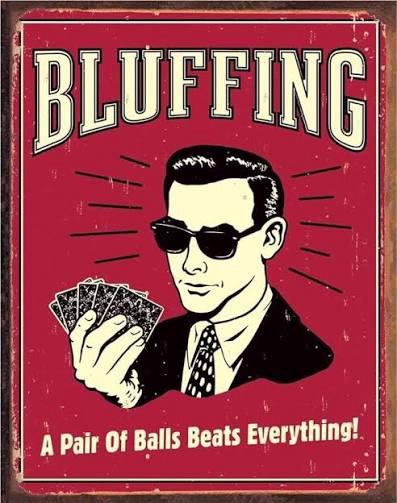
Bluffing in poker remains one of the most powerful — and most misused — tools in 2026. With solvers like GTO Wizard, PioSolver, and newer ones (PeakGTO, GTO Lab) widely available and more affordable than ever, the game has shifted dramatically. Many mid-to-high stakes players defend wider, call lighter with bluff catchers, and punish obvious aggression. Yet bluffing isn’t dead; it’s evolved. The best players bluff smarter, not more often, blending GTO frequencies with sharp exploits against the field.
Whether you’re grinding micro-stakes online, live $1/2 tables in Maryland, or dreaming of bigger games, here’s a practical, up-to-date guide to bluffing effectively in today’s environment.

1. Understand Modern Bluffing Fundamentals (GTO Baseline)
Solvers show bluffing isn’t about “tricking” people — it’s about balance and range advantage.
• Bluff-to-value ratio — On the river in polarized spots, bluff roughly enough so opponents are indifferent to calling with bluff catchers (often ~1 bluff per 2–3 value bets, depending on pot odds).
• Blockers matter hugely — Bluff with hands that block your opponent’s calling range (e.g., A-high bluffs block top pair Ax holdings).
• Board texture dictates frequency — Dry boards (like K72 rainbow) allow more bluffs because value ranges are narrow. Wet/coordinated boards require tighter bluffing.
• Overbetting is standard now — Big river overbets (1.5–2x pot) polarize your range: nuts or air. Use them with strong blockers and when your range looks stronger than villain’s.
In 2026, over-relying on max exploits (e.g., always bluffing stations) burns money against solver-trained regs. Instead, start close to GTO and deviate only when you have clear reads.
2. Best Spots to Bluff in 2026
Target these high-EV opportunities:
• Steal more preflop — 3-bet light wider from the big blind vs late-position opens (especially vs players who fold too much to 3-bets). Mix in some 4-bet bluffs with suited connectors/blockers.
• Float and turn bluff — Call flop with backdoor equity, then bet turn when checked to (classic BlackRain79-style play still crushes low-mid stakes).
• Probe bets / donk bluffs — On scary turn/river cards (e.g., flush completes), donk-lead small from out of position vs passive players who check back too much.
• Capped range exploits — When villain shows weakness (check-check flop/turn), barrel big on rivers where their range caps (no nuts possible).
• ICM pressure in tournaments — Multi-way or bubble spots = more bluffs with strong-but-not-nuts hands (turn missed draws into bluffs).
Avoid bluffing:
• Calling stations / loose players who “won’t fold pairs.”
• When your range is capped (e.g., you checked back flop).
• Into players who rarely bluff themselves (they call lighter to “keep you honest”).
3. Key Tips from Pros Working in 2026
• Table image is still king — If you’re running hot and showing value, your bluffs get through easier. If you’re the table maniac, tighten up — people snap-call.
• Bet sizing tells a story — Make bluffs look like value. Use the same sizes for bluffs and value (e.g., pot-sized on turn for both). In 2026 streams/home games, players notice inconsistent sizing fast.
• Timing tells — Quick bets often scream value or planned bluffs; delays can induce folds if you Hollywood.
• Don’t force it — Bluffing frequency should come from range construction, not ego. Many leaks come from “I need to bluff more” rather than “this spot is +EV.”
• Exploit less, but exploit better — As coaches like Filip Aleksić note, full GTO play beats over-exploiting in tougher fields. Use HUDs/stats to spot under-bluffers (call lighter) and over-bluffers (fold more bluff catchers).
4. Example Hand Breakdown (Modern River Bluff)
Imagine: 100bb effective, you raise BTN with Q♠J♠, BB calls.
• Flop: K♦7♣2♥ (dry) → You c-bet small (33%), BB calls.
• Turn: 4♠ (backdoor flush draw) → You check back (or small bet if aggressive).
• River: A♠ (flush completes, scary card).
Pot is bloated, villain checks. Your range hits the ace hard (AK, AQ), but you have Q-high with the blocker to AA/AK. Overbet jam here — villain folds tons of 88-JJ, weaker Ax that fears the flush. This is a classic polarized bluff that solvers love.
Final Thoughts for 2026
Bluffing wins pots you don’t deserve, but overdoing it kills win rates. Study solvers to learn frequencies, then watch opponents to exploit deviations. Track your red line (aggression without showdown) — if it’s bleeding, bluff less vs calling stations and more vs nits.
The meta keeps shifting toward balance, but human players still fold too much to pressure in the right spots. Master when to apply it, and you’ll keep stacking chips.
What kind of games are you playing most (online cash, live, MTTs)? Any specific bluff spot you’re struggling with? Drop it below — happy to break it down! ♠️
If you enjoyed this article please like, comment share and subscribe. Thanks and see you at the tables!
Understanding GTO in Poker:
What Is GTO in Poker? A Simple 2026 Beginner’s Guide

If you’ve been playing poker in 2026 — whether grinding online micro-stakes, hitting live tables in Vegas or watching streams — you’ve probably heard the term GTO thrown around. It stands for Game Theory Optimal, and it’s one of the biggest game-changers in modern poker.
But what does GTO actually mean? Let’s break it down simply, without the math overload.

GTO Poker Explained in Plain English
GTO is a perfectly balanced strategy that makes you unexploitable. No matter what your opponent does, they can’t gain a long-term edge over you just by adjusting to your play.
Think of it like this:
• In poker, if you bluff too much, opponents start calling lighter and crush you.
• If you never bluff, they fold to every bet and you miss value.
• GTO finds the exact mix of bluffs, value bets, calls, and folds so opponents are indifferent — they can’t profit by changing their strategy against you.
It’s like playing rock-paper-scissors where you randomize perfectly: no one can beat you consistently if you stick to the optimal frequencies.
In poker terms, GTO means:
• Betting the right amount of bluffs vs. value hands in every spot.
• Defending (calling/raising) the perfect percentage against bets.
• Building ranges (groups of hands) that are tough to attack.
The goal? Maximize your expected value (EV) in the long run, even against the best players.
GTO vs. Exploitative Play: Quick Comparison
Most pros in 2026 start with GTO as a baseline (to plug leaks), then deviate exploitatively when they spot clear weaknesses (like calling stations who never fold pairs).
Why GTO Matters So Much in 2026
Thanks to affordable, powerful solvers like GTO Wizard (the top tool right now), PioSolver, PeakGTO, and others, even mid-stakes players study GTO solutions daily. The meta has shifted: regs defend wider, call lighter with bluff-catchers, and punish unbalanced aggression.
If you’re not at least GTO-aware, you’re leaking money in tougher games.
How to Start Using GTO (Without Overwhelm)
1. Learn basics — Focus on preflop ranges first (charts show how often to raise/call/fold from each position).
2. Use tools — GTO Wizard offers instant lookups, trainers, and hand analysis — perfect for beginners to pros.
3. Apply selectively — In soft live games or low-stakes online, exploit more. In reg-heavy fields, stick closer to GTO.
4. Study spots — Review hands: “Was my bluff frequency right here?” instead of “Did villain read me?”
GTO isn’t about playing “perfectly” every hand — it’s about building habits that protect your win rate and let opponents’ mistakes pay you off.
Ready to level up your game? Drop a comment: Are you playing mostly cash, tournaments, or live? What’s one spot where you’re not sure if you’re too tight or too loose?
If you enjoyed this article please like, comment, share and subscribe! Thanks and I’ll see you at the tables!
Exploring the C Bet in Poker
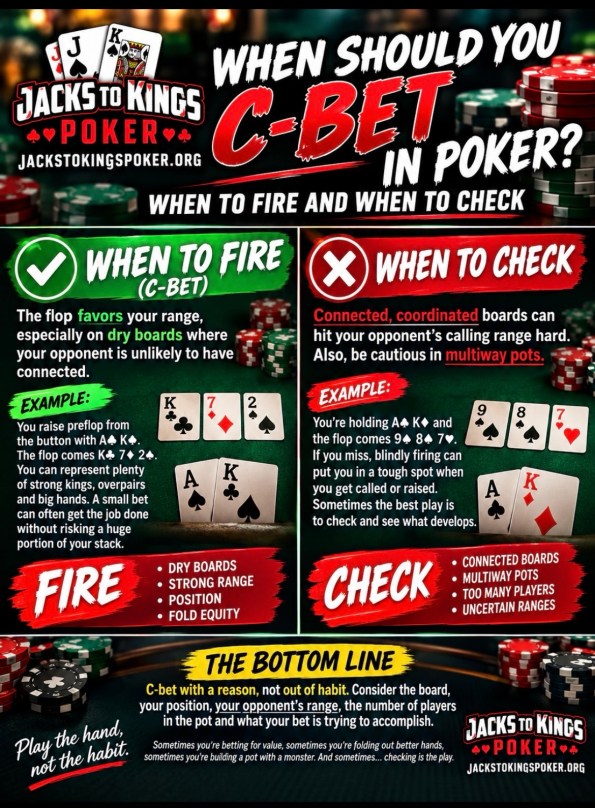
What Exactly Is a Continuation Bet in Poker?
A continuation bet occurs when you raise pre-flop, then bet again on the flop — even if the board didn’t improve your hand.
It’s called a “continuation” because you’re simply continuing the story you started pre-flop: “I have a strong hand.” Your opponents don’t know you missed — and that uncertainty is pure gold.
Why Continuation Bets Are So Important in Poker
A well-timed c-bet serves two massive purposes at once:
1. Taking Down the Pot Immediately
Most flops miss most hands. When you c-bet, you force folds from the majority of opponent ranges that whiffed the board (weak aces, suited connectors, small pairs, etc.).
Result? You win the pot right there without a showdown. In heads-up pots, a standard ⅔-pot c-bet often succeeds 60-70% of the time. That’s massive EV.
2. Gathering Critical Information
Your opponent’s reaction tells you everything:
• Instant fold → They have nothing or a weak draw.
• Quick call → They likely have a marginal made hand or decent draw.
• Raise → They hit big or are bluffing aggressively.
This information shapes your entire plan for the turn and river. You now know whether to double-barrel, check-fold, or value-bet thin.
When Should You Fire That C-Bet?
• You raised pre-flop from early or middle position
• The flop is dry or semi-dry (e.g., K♦ 8♠ 3♥)
• You’re in position against 1-2 opponents
• The board favors your perceived range more than theirs
Pro tip: Even on coordinated boards (flush draws, straight draws), selective c-bets with strong blockers or backdoor equity keep you in control.
Quick Stats That Prove the Power of C-Bets
• Average c-bet frequency for winning regulars: 55-65%
• Expected value of a single successful c-bet: often +0.75 to +1.5 big blinds
• Players who c-bet too little leave money on the table; players who c-bet too much get punished on later streets
Final Thoughts: Make the Continuation Bet Your Default
The continuation bet in poker isn’t just a move — it’s a mindset. It turns marginal hands into winners and turns information into profit. Master the c-bet and you’ll instantly start stealing more pots while reading your opponents like an open book.
Ready to level up your poker game? Start incorporating continuation bets into your sessions today and watch your win rate climb.
What’s your favorite board texture for a c-bet? Drop it in the comments below!
If you enjoyed this article please like, share, comment and subscribe! Thanks, see you at the tables!
Poker Position 101
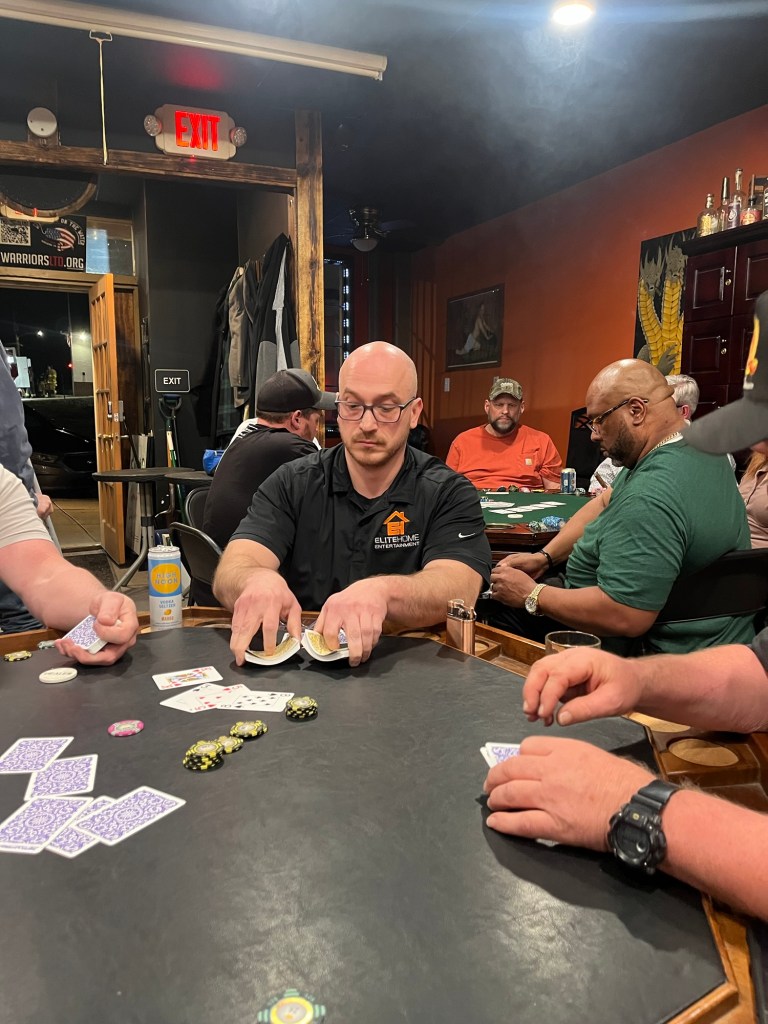
I wrote an article recently called the importance of understanding position in poker and have had several people ask me more about the different positions and what they are called. I decided to follow up with this simple explanation as a back to basics.
Poker table positions are one of the most important concepts for beginners to learn in Texas Hold’em (the most popular poker variant). Your position at the table determines when you act in each betting round, which gives you more (or less) information about what other players are doing. Acting later is a huge advantage because you see everyone’s actions before deciding.
The dealer button (a small disc labeled “Dealer”) moves clockwise each hand, so positions rotate. This guide focuses on a standard 9-handed (full-ring) table, common in live games and many online settings.
Why Position Matters for Beginners
• Early positions act first → tougher, play fewer hands.
• Late positions act last → easier, play more hands aggressively.
• Blinds post forced bets but act out of order.
Positions are grouped into early, middle, late, and blinds.
Poker Positions Explained (9-Handed Table)
1. Small Blind (SB)
Directly left of the button. Posts the small forced bet (half the big blind). Acts second-to-last preflop (after big blind calls/raises) but first postflop (after the flop). Tricky spot—play carefully.
2. Big Blind (BB)
Left of the small blind. Posts the full forced bet. Acts last preflop (great for seeing raises) but second postflop. Defend your blind with decent hands.
3. Under the Gun (UTG)
First to act preflop (left of big blind). “Under the gun” means pressure—no one has acted yet. Tightest position—only play strong hands.
4. Under the Gun +1 (UTG+1)
Next after UTG. Still early position. Similar to UTG: be selective.
5. Lojack (LJ) or Middle Position
Early-middle. More flexibility than UTG but still somewhat early.
6. Hijack (HJ)
Middle-late position (right of lojack). Good spot to open-raise if folded to you.
7. Cutoff (CO)
Right of the hijack (one seat right of button). Strong late position—often steal blinds with wider ranges.
8. Button (BTN)
The dealer position (button in front). Best seat overall. Acts last postflop in almost every hand—maximum information. Play most hands aggressively here.
Quick Tips for Beginners
• Position > Cards — A mediocre hand in late position often beats a good hand in early position.
• Always note the button location—it shows who’s in late position.
• In online poker or 6-max games, positions shift (fewer early seats, more late-play opportunities).
• Start by playing tight from early positions and looser from late.
Mastering positions will instantly improve your game more than memorizing hand rankings. Practice at low-stakes tables, watch where the button is, and ask yourself: “Do I act early or late?” Good luck at the tables
If you enjoyed this article please like, comment subscribe and share. Thank you and see you at the tables!
Implied odds in poker. What the heck are they?
What Are Implied Odds in Poker? A Complete Guide for 2026 Players
If you’re serious about improving your Texas Hold’em game—whether in cash games, tournaments, or online poker—you’ve probably heard the term implied odds. Many players understand pot odds, but implied odds often separate winning players from break-even ones.
In this guide, we’ll break down exactly what implied odds are, how they differ from pot odds, when they matter most, real-world examples, and practical tips to use them at the table. By the end, you’ll know precisely when to call with draws that look “unprofitable” on paper.
What Are Implied Odds in Poker?
Implied odds refer to the additional money you expect to win on future betting streets if you complete your drawing hand.
Unlike pot odds (which only look at the current pot and the price to call right now), implied odds factor in future bets your opponent(s) will likely pay once you hit your hand.

In short:
• Pot odds = What the pot offers now
• Implied odds = What the pot will likely offer later if you improve
This concept shines in no-limit Hold’em (especially deep-stacked cash games), where players can win big pots after hitting strong hands like straights, flushes, or sets.
Pot Odds vs Implied Odds: Key Differences
Pot odds tell you if a call is +EV based on current math. Implied odds let you justify calls when pot odds alone aren’t enough—because you expect to stack your opponent (or win big) when you hit.
How to Calculate Implied Odds (Simple Formula)

There’s no perfect formula since it involves estimation, but here’s a practical way pros think about it:
1. Calculate your pot odds first.
2. Figure out how much equity you need (your “required equity”).
3. Estimate how much extra money you’ll win if you hit.
4. Add that to the current pot → get your effective implied pot.
Basic shortcut (great for quick decisions):
Required extra $$ on later streets = (Amount to call × Required odds) – Current pot after call
Example (common flush draw on the flop):
• Pot = $100
• Opponent bets $50 → Pot now $150
• You must call $50
• Pot odds = 150:50 = 3:1 (you need ~25% equity to call)
• Flush draw has ~35% equity to hit by river (9 outs × 4 ≈ 36%)
• Pot odds alone say call is profitable
But suppose pot odds were worse (e.g., opponent bets $200 into $100 pot → you need to call $200 for $300 pot = 1.5:1, need ~40% equity).
• Your flush draw is only ~35% → looks like a fold.
• But if stacks are deep and villain pays off big when you hit → you add implied money.
If you estimate villain will pay $400 more on turn + river when you hit → your effective pot becomes $300 + $400 = $700.
New implied odds = 700:200 = 3.5:1 → now a profitable call.
Real Poker Example: Flush Draw with Great Implied Odds
Scenario (No-Limit Hold’em, 200bb deep stacks):
• You have A♠ K♠ in the big blind.
• Flop: 9♠ 7♠ 2♦ (you have the nut flush draw + overcards)
• Pot = $60
• Villain (loose-aggressive fish) bets $45
• You call $45 (pot now $150)
Turn brings 4♥ (still draw)
• Villain bets $120
• Pot = $270
• You need to call $120
Raw pot odds = 270:120 ≈ 2.25:1 → need ~31% equity.
Your equity to hit flush on river = 9 outs / 46 cards ≈ 19.6%
Looks bad… but implied odds save the day.
Villain has shown he overvalues top pair and will stack off with it. Effective stacks behind = $400.
If you hit your flush, you expect to win at least $300–$400 more (villain calls your river shove or bets big).
Effective pot if hit ≈ $270 (current after call) + $350 (expected) = $620+
Implied odds ≈ 620:120 ≈ 5:1 → way better than needed.
You call profitably, even though raw pot odds + equity say no.
Reverse example (bad implied odds): Short-stack opponent or tight player who folds to river bets → implied odds near zero → fold the draw.
When Implied Odds Are Highest (and Lowest)
Great implied odds situations:
• Deep stacks (150bb+)
• Draws to nuts (nut flush, straight)
• Loose/passive opponents who pay off big
• Multiway pots (more people to pay you off)
• You have disguised strength (e.g., set-mining with small pairs)
Poor implied odds situations:
• Shallow stacks (<50bb)
• Non-nut draws (weak flush, gutshot)
• Tight/aggressive opponents who fold to aggression
• Board is scary/paired (opponent fears worse)
• You’re out of position
Common Mistakes Players Make with Implied Odds
1. Overestimating how much they’ll win → “He’ll pay my whole stack!” (Reality: villain often checks back or folds.)
2. Ignoring reverse implied odds → You hit, but villain has a better hand and stacks you.
3. Calling too much on turn → Turn calls need higher implied odds since only one street left.
4. Using implied odds to justify every draw → Sometimes pot odds alone are terrible and future money won’t compensate.
Final Tips to Master Implied Odds
• Ask yourself: “If I hit, how much will this specific opponent pay me?”
• Adjust for villain type (fish = high implied, reg = lower).
• In tournaments, implied odds drop as stacks get shorter.
• Practice with tools like equity calculators to compare raw vs. implied scenarios.
• Remember: Implied odds are an estimate—lean conservative until you know your opponents well.
Mastering implied odds turns marginal calls into big winners and helps you avoid expensive mistakes. Next time you’re facing a draw with “bad” pot odds, pause and calculate the implied potential—it might be the most profitable play at the table.
What are your biggest implied odds leaks? Drop a comment below—I read them all!
Ready to level up your poker math? Check out our guides on pot odds, equity realization, and reverse implied odds.
If you enjoyed this article please like, share, comment and subscribe! Thanks and I’ll see you at the tables!
A lesson in playing $2/$5 min buy.
Since recently I got a chance to play $2/$5 and got stacked, I decided to do my research and write an article about how to best play with a minimal buy in. I included the resources.

Optimal Starting Hands for $2/$5 Poker: Short Stack Strategy with Minimum Buy-In (40BB)
If you’re grinding $2/$5 No-Limit Hold’em live cash games and buying in for the minimum (usually $200, or 40 big blinds), your poker strategy must change dramatically from the deep-stack playbook most players follow.
With only 40BB, you can’t rely on implied odds, multi-street bluffs, or speculative hands like suited connectors. Instead, you need tight, aggressive preflop play focused on premium starting hands that make strong top pairs or better right away.
In this guide, we’ll break down the optimal starting hands for $2/$5 poker at minimum buy-in, provide position-based ranges, and share pro tips to maximize your edge. Whether you’re new to short-stack play or looking to optimize your $2/5 NLHE strategy, this is your complete roadmap.
Why Minimum Buy-In Changes Everything in $2/$5 NLHE
Most $2/$5 tables allow a minimum buy-in of $200 (exactly 40 big blinds). This short-to-mid stack depth turns the game into a high-variance, preflop-heavy battle.
Key differences from 100BB+ deep stacks:
• No set-mining with small pairs (implied odds disappear).
• Fewer postflop decisions — you often raise-or-shove preflop or commit on the flop.
• You play for stacks quickly, so hand strength and fold equity matter most.
• Opponents (recreational players and regs) overcall lighter, giving your premiums massive value.
Short-stacking isn’t always optimal long-term (deeper stacks let you extract more value), but it’s bankroll-friendly for $2/$5 and exploits loose tables common at this stake.
Optimal Starting Hands by Stack Depth (40BB Focus)
At exactly 40 big blinds, prioritize big-card strength hands that flop top pair or better. Avoid suited connectors (87s, T9s), small pocket pairs (22-55), and weak aces (A5s-A2s) — they lose money without deep implied odds.
Core 40BB Starting Hand List (from strongest to playable):
• Premium pairs: AA, KK, QQ, JJ
• Strong aces: AKs, AQs, AKo, AQo, AJs
• Borderline: TT, AJo, KQs (add selectively by position)
As your stack drops toward 30BB or below, tighten further and shift to shove-or-fold.
Quick Reference by Effective Stack:
• 40BB: AA–JJ, AKs–AQs, AKo–AQo, AJs
• 30BB or less: Add AJ, TT, ATs, KQs
• 20BB or less: Add AT, KQ, KJs, KJ
• 10BB or less: Push any Ax, QJs, QJ (all-in preflop)
These hands dominate because they win at showdown often and play well when you jam.
Position-Based Opening Ranges for $2/$5 Short Stack (40BB)
Position still matters — even short-stacked. Here’s a simple, profitable range structure for a typical 9-handed $2/$5 table:
Early Position (UTG, UTG+1):
Play ultra-tight (top ~8-10% of hands).
Raise 3–4x BB (or larger to $20–$25).
Hands: AA–JJ, AKs–AQs, AKo–AQo
Middle Position (MP):
Slightly wider.
Hands: AA–TT, AKs–AJs, AKo–AJo, KQs
Late Position (Cutoff, Button):
Steal more aggressively, especially vs. passive blinds.
Hands: AA–99, AKs–ATs, AKo–AJo, KQs–KJs, QJs
(Shove wider from Button if blinds fold often.)
Blinds Defense:
3-bet shove premiums vs. opens. Call lighter only with position and very weak openers.
Pro Tip: Always raise first-in — never limp. At $2/$5, a $15–$20 open builds the pot while giving you fold equity. If facing a raise, 3-bet shove your strongest hands (QQ+, AK) for maximum pressure.
How to Play These Hands Postflop (Short Stack Style)
With 40BB, postflop play is simple ABC poker:
• Hit the flop strong? Bet big or jam (especially top pair top kicker or better).
• Miss? Check-fold unless you have a strong draw with equity.
• C-bet size: 50–75% pot or all-in on coordinated boards.
• Avoid fancy bluffs — your edge comes from value, not hero folds.
Example: You open AKs from middle position for $20. Flop comes A-7-2 rainbow. With ~35BB behind, jam — most $2/$5 opponents call with weaker aces or draws.
7 Essential Tips for Winning $2/$5 Short Stack Play
1. Learn preflop ranges cold — Every decision is worth big chunks of your stack.
2. Track effective stacks — Always play to the shortest stack at the table.
3. Raise bigger preflop — $15–$25 opens deter multi-way pots.
4. Exploit loose callers — $2/$5 players love calling with KJo or 76s — your premiums crush them.
5. Don’t get below 30BB — Top up if you lose a pot to stay in the 40BB sweet spot.
6. Leave after doubling up (optional) — Many short-stackers cash out winners to lock in profit.
7. Bankroll for variance — Short-stack play has big swings; bring 30–50+ buy-ins.
Common Mistakes to Avoid in $2/$5 Minimum Buy-In Games
• Playing suited connectors or small pairs — They bleed money without implied odds.
• Limping or min-raising — Builds small pots and invites multi-way action.
• Being too passive — Short stacks must apply pressure.
• Ignoring table dynamics — Looser tables = wider late-position steals.
Final Thoughts: Crush $2/$5 with Minimum Buy-In
Mastering these optimal starting hands for $2/$5 poker with a 40BB minimum buy-in gives you a massive edge over recreational players who treat it like deep-stack poker. Stick to premiums, play tight-aggressive, and watch your win rate climb.
If you enjoyed this article please like, comment, share or subscribe! Thank you and I’ll see you at the tables!
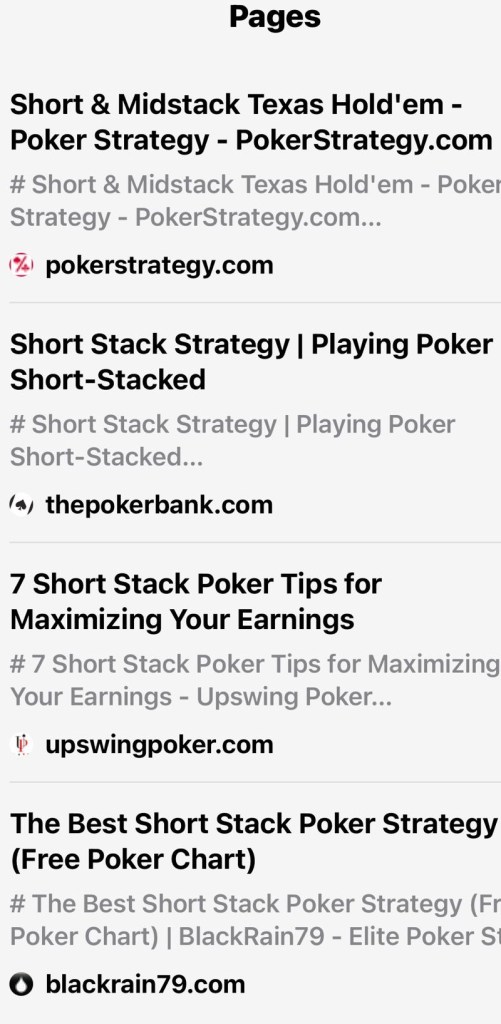
Article Sources:
What kind of Poker Player are you?

Understanding Poker Player Types: Casual, Recreational, and Regular Players Explained
In the world of poker, knowing the different types of poker players can give you a real edge at the table. Whether you’re a beginner searching for poker playing styles or a seasoned grinder looking to exploit poker players, understanding categories like casual poker player, recreational poker player, and poker regular is key. These poker player types influence game dynamics, strategy, and even where you choose to play—be it online poker sites, live casinos, or home games. In this guide, we’ll break down each type with brief descriptions, highlighting their motivations, habits, and how they fit into the broader poker strategy ecosystem.
What Is a Casual Poker Player?
A casual poker player is the epitome of low-commitment fun in the game. These players dip into poker sporadically, often treating it like any other leisure activity—think someone who joins a friendly home game during holidays or logs into a free online poker app when bored. Their primary goal isn’t winning big; it’s simply enjoying the social vibe or killing time.
Key traits of a casual poker player:
• Frequency: Plays infrequently, maybe a few times a year.
• Strategy: Minimal knowledge beyond basic rules; decisions are gut-based, leading to common mistakes like chasing unlikely draws.
• Mindset: Low stakes, no bankroll management—losses are just part of the entertainment.
• Impact on Games: They add unpredictability but aren’t consistent enough to be reliable “action” providers.
If you’re searching for beginner poker tips, starting as a casual player is a low-pressure way to learn without the grind.
What Is a Recreational Poker Player (Rec)?
Often abbreviated as “rec,” a recreational poker player takes the hobby a step further than casuals. These are the enthusiasts who play for the thrill and social interaction, viewing poker as a fun escape rather than a job. In poker lingo, recs are the “fish” that keep games juicy, as they prioritize enjoyment over profit.
Brief description of a recreational poker player:
• Frequency: Regular sessions, like weekly casino visits or online games a few times a month.
• Strategy: Basic understanding of hands, but prone to loose calls and speculative plays—think overvaluing suited connectors in video poker or live settings.
• Mindset: Accepts long-term losses as the “cost of fun,” similar to a night out. They might watch poker streams or follow pros for entertainment.
• Impact on Games: Essential for the ecosystem; pros love tables full of recs because they’re exploitable with solid poker strategy.
Recs embody the spirit of free poker games but with real money on the line, making them a staple in discussions about poker player differences.
What Is a Regular Poker Player (Reg)?
A poker regular, or “reg,” represents the more serious side of non-pro play. These players treat poker as a consistent pursuit, often aiming to break even or profit over time. They’re the familiar faces at local card rooms or online tables, grinding sessions with discipline.
Essential traits of a poker regular:
• Frequency: Plays frequently, sometimes daily, with a routine schedule.
• Strategy: Employs structured approaches like tight-aggressive (TAG) or loose-aggressive (LAG) styles, focusing on stats, position, and reads to exploit poker players.
• Mindset: Bankroll-focused, with goals for improvement—might use tools like HUDs or study resources to refine their game.
• Impact on Games: They stabilize tables but can make them tougher; regs often spot and avoid each other, targeting recs and casuals instead.
For those researching poker terms or advancing from casual play, becoming a reg involves mastering essential poker math and player reads.
Key Differences Between Casual, Rec, and Regular Poker Players
To sum up the poker player types:
• Casual vs. Recreational: Casuals play rarely and passively, while recs are more engaged hobbyists who show up often but still prioritize fun over strategy.
• Recreational vs. Regular: Recs lose money long-term for enjoyment, whereas regs aim for sustainability or profit through disciplined play.
• Overall: Casuals bring whimsy, recs fuel the action, and regs provide the challenge—together, they create balanced, exciting games.
Understanding these types of poker players can transform your sessions. If you’re a casual poker player eyeing progression, start by observing regs at free poker games to pick up tips. For regs, spotting recs is your path to profitability.
Whether you’re into online poker or live tournaments, recognizing these categories enhances your experience. What’s your poker player type? Share in the comments below!
Thank you for reading this article. If you enjoyed it please like, comment or subscribe! See you at the table!




Recent Comments