When Should You C-Bet in Poker? When to Fire and When to Check
The continuation bet (C-bet) is one of the most common weapons in poker, but that doesn’t mean you should fire every flop just because you raised preflop. C-betting makes sense when the flop favors your perceived range, especially on dry boards where your opponent is unlikely to have connected. A flop like K♣ 7♦ 2♠ is a great example. As the preflop raiser, you can represent plenty of strong kings, overpairs and big hands. A small bet can often get the job done without risking a huge portion of your stack.
Knowing when NOT to C-bet is just as important. Connected, coordinated boards such as 9♠ 8♠ 7♥ can hit your opponent’s calling range hard. If you’re holding A♣ K♦ and completely miss, blindly firing can put you in a tough spot when you get called or raised. Multiway pots are another reason to slow down—your bluff has to get through multiple opponents. Sometimes the best poker play is simply checking and seeing what develops.
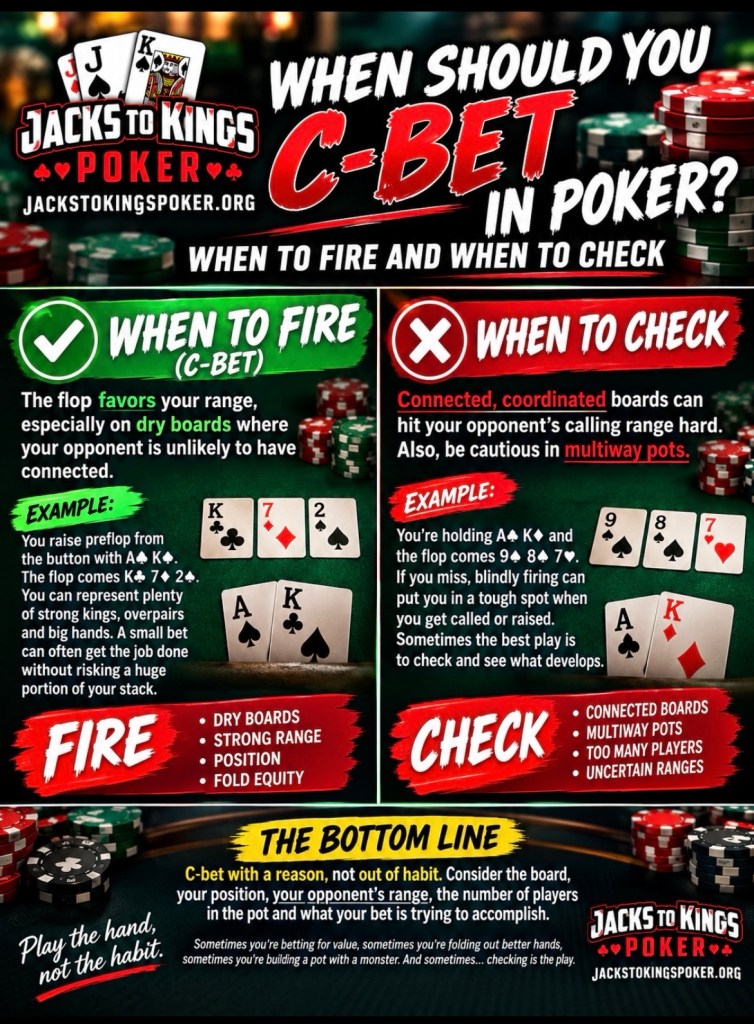
The key is to C-bet with a reason, not out of habit. Consider the board, your position, your opponent’s range, the number of players in the pot and what your bet is trying to accomplish. Sometimes you’re betting for value, sometimes you’re folding out better hands, and sometimes you’re building a pot with a monster. And sometimes… checking is the play. Jacks to Kings Poker — play the hand, not the habit.
If you enjoyed this article please, like, share, comment and subscribe! Thanks for reading and I’ll see you at the tables!




Recent Comments