Archive
Implied odds in poker. What the heck are they?

What Are Implied Odds in Poker? A Complete Guide for 2026 Players
If you’re serious about improving your Texas Hold’em game—whether in cash games, tournaments, or online poker—you’ve probably heard the term implied odds. Many players understand pot odds, but implied odds often separate winning players from break-even ones.
In this guide, we’ll break down exactly what implied odds are, how they differ from pot odds, when they matter most, real-world examples, and practical tips to use them at the table. By the end, you’ll know precisely when to call with draws that look “unprofitable” on paper.
What Are Implied Odds in Poker?
Implied odds refer to the additional money you expect to win on future betting streets if you complete your drawing hand.
Unlike pot odds (which only look at the current pot and the price to call right now), implied odds factor in future bets your opponent(s) will likely pay once you hit your hand.

In short:
• Pot odds = What the pot offers now
• Implied odds = What the pot will likely offer later if you improve
This concept shines in no-limit Hold’em (especially deep-stacked cash games), where players can win big pots after hitting strong hands like straights, flushes, or sets.
Pot Odds vs Implied Odds: Key Differences
Pot odds tell you if a call is +EV based on current math. Implied odds let you justify calls when pot odds alone aren’t enough—because you expect to stack your opponent (or win big) when you hit.
How to Calculate Implied Odds (Simple Formula)

There’s no perfect formula since it involves estimation, but here’s a practical way pros think about it:
1. Calculate your pot odds first.
2. Figure out how much equity you need (your “required equity”).
3. Estimate how much extra money you’ll win if you hit.
4. Add that to the current pot → get your effective implied pot.
Basic shortcut (great for quick decisions):
Required extra $$ on later streets = (Amount to call × Required odds) – Current pot after call
Example (common flush draw on the flop):
• Pot = $100
• Opponent bets $50 → Pot now $150
• You must call $50
• Pot odds = 150:50 = 3:1 (you need ~25% equity to call)
• Flush draw has ~35% equity to hit by river (9 outs × 4 ≈ 36%)
• Pot odds alone say call is profitable
But suppose pot odds were worse (e.g., opponent bets $200 into $100 pot → you need to call $200 for $300 pot = 1.5:1, need ~40% equity).
• Your flush draw is only ~35% → looks like a fold.
• But if stacks are deep and villain pays off big when you hit → you add implied money.
If you estimate villain will pay $400 more on turn + river when you hit → your effective pot becomes $300 + $400 = $700.
New implied odds = 700:200 = 3.5:1 → now a profitable call.
Real Poker Example: Flush Draw with Great Implied Odds
Scenario (No-Limit Hold’em, 200bb deep stacks):
• You have A♠ K♠ in the big blind.
• Flop: 9♠ 7♠ 2♦ (you have the nut flush draw + overcards)
• Pot = $60
• Villain (loose-aggressive fish) bets $45
• You call $45 (pot now $150)
Turn brings 4♥ (still draw)
• Villain bets $120
• Pot = $270
• You need to call $120
Raw pot odds = 270:120 ≈ 2.25:1 → need ~31% equity.
Your equity to hit flush on river = 9 outs / 46 cards ≈ 19.6%
Looks bad… but implied odds save the day.
Villain has shown he overvalues top pair and will stack off with it. Effective stacks behind = $400.
If you hit your flush, you expect to win at least $300–$400 more (villain calls your river shove or bets big).
Effective pot if hit ≈ $270 (current after call) + $350 (expected) = $620+
Implied odds ≈ 620:120 ≈ 5:1 → way better than needed.
You call profitably, even though raw pot odds + equity say no.
Reverse example (bad implied odds): Short-stack opponent or tight player who folds to river bets → implied odds near zero → fold the draw.
When Implied Odds Are Highest (and Lowest)
Great implied odds situations:
• Deep stacks (150bb+)
• Draws to nuts (nut flush, straight)
• Loose/passive opponents who pay off big
• Multiway pots (more people to pay you off)
• You have disguised strength (e.g., set-mining with small pairs)
Poor implied odds situations:
• Shallow stacks (<50bb)
• Non-nut draws (weak flush, gutshot)
• Tight/aggressive opponents who fold to aggression
• Board is scary/paired (opponent fears worse)
• You’re out of position
Common Mistakes Players Make with Implied Odds
1. Overestimating how much they’ll win → “He’ll pay my whole stack!” (Reality: villain often checks back or folds.)
2. Ignoring reverse implied odds → You hit, but villain has a better hand and stacks you.
3. Calling too much on turn → Turn calls need higher implied odds since only one street left.
4. Using implied odds to justify every draw → Sometimes pot odds alone are terrible and future money won’t compensate.

Final Tips to Master Implied Odds
• Ask yourself: “If I hit, how much will this specific opponent pay me?”
• Adjust for villain type (fish = high implied, reg = lower).
• In tournaments, implied odds drop as stacks get shorter.
• Practice with tools like equity calculators to compare raw vs. implied scenarios.
• Remember: Implied odds are an estimate—lean conservative until you know your opponents well.
Mastering implied odds turns marginal calls into big winners and helps you avoid expensive mistakes. Next time you’re facing a draw with “bad” pot odds, pause and calculate the implied potential—it might be the most profitable play at the table.
What are your biggest implied odds leaks? Drop a comment below—I read them all!
Ready to level up your poker math? Check out our guides on pot odds, equity realization, and reverse implied odds.
If you enjoyed this article please like, share, comment and subscribe! Thanks and I’ll see you at the tables!

A lesson in playing $2/$5 min buy.
Since recently I got a chance to play $2/$5 and got stacked, I decided to do my research and write an article about how to best play with a minimal buy in. I included the resources.

Optimal Starting Hands for $2/$5 Poker: Short Stack Strategy with Minimum Buy-In (40BB)
If you’re grinding $2/$5 No-Limit Hold’em live cash games and buying in for the minimum (usually $200, or 40 big blinds), your poker strategy must change dramatically from the deep-stack playbook most players follow.
With only 40BB, you can’t rely on implied odds, multi-street bluffs, or speculative hands like suited connectors. Instead, you need tight, aggressive preflop play focused on premium starting hands that make strong top pairs or better right away.
In this guide, we’ll break down the optimal starting hands for $2/$5 poker at minimum buy-in, provide position-based ranges, and share pro tips to maximize your edge. Whether you’re new to short-stack play or looking to optimize your $2/5 NLHE strategy, this is your complete roadmap.
Why Minimum Buy-In Changes Everything in $2/$5 NLHE
Most $2/$5 tables allow a minimum buy-in of $200 (exactly 40 big blinds). This short-to-mid stack depth turns the game into a high-variance, preflop-heavy battle.
Key differences from 100BB+ deep stacks:
• No set-mining with small pairs (implied odds disappear).
• Fewer postflop decisions — you often raise-or-shove preflop or commit on the flop.
• You play for stacks quickly, so hand strength and fold equity matter most.
• Opponents (recreational players and regs) overcall lighter, giving your premiums massive value.
Short-stacking isn’t always optimal long-term (deeper stacks let you extract more value), but it’s bankroll-friendly for $2/$5 and exploits loose tables common at this stake.
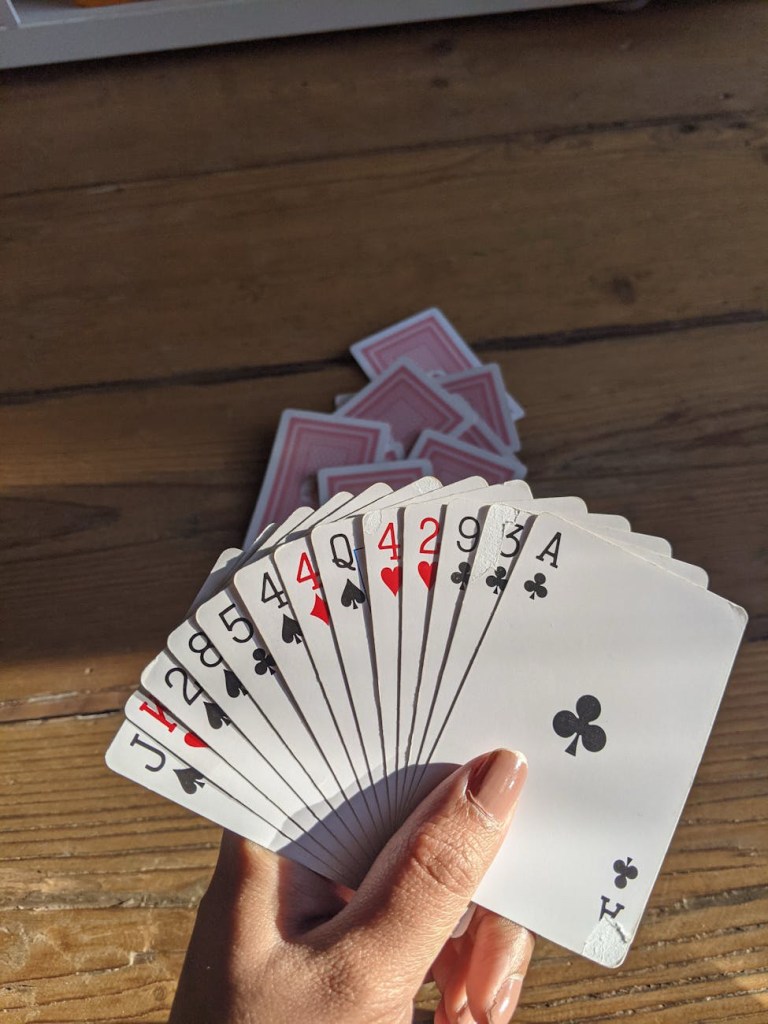
Optimal Starting Hands by Stack Depth (40BB Focus)
At exactly 40 big blinds, prioritize big-card strength hands that flop top pair or better. Avoid suited connectors (87s, T9s), small pocket pairs (22-55), and weak aces (A5s-A2s) — they lose money without deep implied odds.
Core 40BB Starting Hand List (from strongest to playable):
• Premium pairs: AA, KK, QQ, JJ
• Strong aces: AKs, AQs, AKo, AQo, AJs
• Borderline: TT, AJo, KQs (add selectively by position)
As your stack drops toward 30BB or below, tighten further and shift to shove-or-fold.
Quick Reference by Effective Stack:
• 40BB: AA–JJ, AKs–AQs, AKo–AQo, AJs
• 30BB or less: Add AJ, TT, ATs, KQs
• 20BB or less: Add AT, KQ, KJs, KJ
• 10BB or less: Push any Ax, QJs, QJ (all-in preflop)
These hands dominate because they win at showdown often and play well when you jam.
Position-Based Opening Ranges for $2/$5 Short Stack (40BB)
Position still matters — even short-stacked. Here’s a simple, profitable range structure for a typical 9-handed $2/$5 table:
Early Position (UTG, UTG+1):
Play ultra-tight (top ~8-10% of hands).
Raise 3–4x BB (or larger to $20–$25).
Hands: AA–JJ, AKs–AQs, AKo–AQo
Middle Position (MP):
Slightly wider.
Hands: AA–TT, AKs–AJs, AKo–AJo, KQs
Late Position (Cutoff, Button):
Steal more aggressively, especially vs. passive blinds.
Hands: AA–99, AKs–ATs, AKo–AJo, KQs–KJs, QJs
(Shove wider from Button if blinds fold often.)
Blinds Defense:

3-bet shove premiums vs. opens. Call lighter only with position and very weak openers.
Pro Tip: Always raise first-in — never limp. At $2/$5, a $15–$20 open builds the pot while giving you fold equity. If facing a raise, 3-bet shove your strongest hands (QQ+, AK) for maximum pressure.
How to Play These Hands Postflop (Short Stack Style)
With 40BB, postflop play is simple ABC poker:
• Hit the flop strong? Bet big or jam (especially top pair top kicker or better).
• Miss? Check-fold unless you have a strong draw with equity.
• C-bet size: 50–75% pot or all-in on coordinated boards.
• Avoid fancy bluffs — your edge comes from value, not hero folds.
Example: You open AKs from middle position for $20. Flop comes A-7-2 rainbow. With ~35BB behind, jam — most $2/$5 opponents call with weaker aces or draws.
7 Essential Tips for Winning $2/$5 Short Stack Play
1. Learn preflop ranges cold — Every decision is worth big chunks of your stack.
2. Track effective stacks — Always play to the shortest stack at the table.
3. Raise bigger preflop — $15–$25 opens deter multi-way pots.
4. Exploit loose callers — $2/$5 players love calling with KJo or 76s — your premiums crush them.
5. Don’t get below 30BB — Top up if you lose a pot to stay in the 40BB sweet spot.
6. Leave after doubling up (optional) — Many short-stackers cash out winners to lock in profit.
7. Bankroll for variance — Short-stack play has big swings; bring 30–50+ buy-ins.
Common Mistakes to Avoid in $2/$5 Minimum Buy-In Games
• Playing suited connectors or small pairs — They bleed money without implied odds.
• Limping or min-raising — Builds small pots and invites multi-way action.
• Being too passive — Short stacks must apply pressure.
• Ignoring table dynamics — Looser tables = wider late-position steals.
Final Thoughts: Crush $2/$5 with Minimum Buy-In
Mastering these optimal starting hands for $2/$5 poker with a 40BB minimum buy-in gives you a massive edge over recreational players who treat it like deep-stack poker. Stick to premiums, play tight-aggressive, and watch your win rate climb.
If you enjoyed this article please like, comment, share or subscribe! Thank you and I’ll see you at the tables!
Article Sources:
What kind of Poker Player are you?

Understanding Poker Player Types: Casual, Recreational, and Regular Players Explained
In the world of poker, knowing the different types of poker players can give you a real edge at the table. Whether you’re a beginner searching for poker playing styles or a seasoned grinder looking to exploit poker players, understanding categories like casual poker player, recreational poker player, and poker regular is key. These poker player types influence game dynamics, strategy, and even where you choose to play—be it online poker sites, live casinos, or home games. In this guide, we’ll break down each type with brief descriptions, highlighting their motivations, habits, and how they fit into the broader poker strategy ecosystem.
What Is a Casual Poker Player?
A casual poker player is the epitome of low-commitment fun in the game. These players dip into poker sporadically, often treating it like any other leisure activity—think someone who joins a friendly home game during holidays or logs into a free online poker app when bored. Their primary goal isn’t winning big; it’s simply enjoying the social vibe or killing time.
Key traits of a casual poker player:
• Frequency: Plays infrequently, maybe a few times a year.
• Strategy: Minimal knowledge beyond basic rules; decisions are gut-based, leading to common mistakes like chasing unlikely draws.
• Mindset: Low stakes, no bankroll management—losses are just part of the entertainment.
• Impact on Games: They add unpredictability but aren’t consistent enough to be reliable “action” providers.
If you’re searching for beginner poker tips, starting as a casual player is a low-pressure way to learn without the grind.
What Is a Recreational Poker Player (Rec)?
Often abbreviated as “rec,” a recreational poker player takes the hobby a step further than casuals. These are the enthusiasts who play for the thrill and social interaction, viewing poker as a fun escape rather than a job. In poker lingo, recs are the “fish” that keep games juicy, as they prioritize enjoyment over profit.
Brief description of a recreational poker player:
• Frequency: Regular sessions, like weekly casino visits or online games a few times a month.
• Strategy: Basic understanding of hands, but prone to loose calls and speculative plays—think overvaluing suited connectors in video poker or live settings.
• Mindset: Accepts long-term losses as the “cost of fun,” similar to a night out. They might watch poker streams or follow pros for entertainment.
• Impact on Games: Essential for the ecosystem; pros love tables full of recs because they’re exploitable with solid poker strategy.
Recs embody the spirit of free poker games but with real money on the line, making them a staple in discussions about poker player differences.
What Is a Regular Poker Player (Reg)?
A poker regular, or “reg,” represents the more serious side of non-pro play. These players treat poker as a consistent pursuit, often aiming to break even or profit over time. They’re the familiar faces at local card rooms or online tables, grinding sessions with discipline.
Essential traits of a poker regular:
• Frequency: Plays frequently, sometimes daily, with a routine schedule.
• Strategy: Employs structured approaches like tight-aggressive (TAG) or loose-aggressive (LAG) styles, focusing on stats, position, and reads to exploit poker players.
• Mindset: Bankroll-focused, with goals for improvement—might use tools like HUDs or study resources to refine their game.
• Impact on Games: They stabilize tables but can make them tougher; regs often spot and avoid each other, targeting recs and casuals instead.
For those researching poker terms or advancing from casual play, becoming a reg involves mastering essential poker math and player reads.
Key Differences Between Casual, Rec, and Regular Poker Players
To sum up the poker player types:
• Casual vs. Recreational: Casuals play rarely and passively, while recs are more engaged hobbyists who show up often but still prioritize fun over strategy.
• Recreational vs. Regular: Recs lose money long-term for enjoyment, whereas regs aim for sustainability or profit through disciplined play.
• Overall: Casuals bring whimsy, recs fuel the action, and regs provide the challenge—together, they create balanced, exciting games.
Understanding these types of poker players can transform your sessions. If you’re a casual poker player eyeing progression, start by observing regs at free poker games to pick up tips. For regs, spotting recs is your path to profitability.
Whether you’re into online poker or live tournaments, recognizing these categories enhances your experience. What’s your poker player type? Share in the comments below!
Thank you for reading this article. If you enjoyed it please like, comment or subscribe! See you at the table!

Winning $1/$2 Heads-Up Poker: Why Aggression Is King

Playing Aggressive Heads-Up Poker in a $1/$2 Cash Game
Heads-up poker at $1/$2 cash games is where aggression truly pays off. With only two players at the table, hand values change, ranges widen, and passive play quickly gets exposed. If you’re not applying pressure, you’re likely bleeding chips.
In this guide, we’ll break down how to play aggressive heads-up poker at $1/$2, when to apply pressure, and how to avoid the most common mistakes low-stakes players make.
Why Aggression Is So Important in $1/$2 Heads-Up Poker
At $1/$2, many players are uncomfortable playing heads-up. They’re used to multi-way pots and tight ranges. This creates a huge edge for aggressive players.
Aggression allows you to:
Win blinds consistently Pick up small pots without showdown Force opponents into mistakes Control the tempo of the match
Since both players post blinds every hand, folding too often simply isn’t an option. Aggressive poker is winning poker heads-up.
Preflop Strategy: Raising Wide at $1/$2 Heads-Up
In a heads-up $1/$2 cash game, opening ranges should be very wide—especially on the button.
Recommended Preflop Approach
Button: Raise 70–90% of hands Big Blind: Defend wide and mix in 3-bets Use smaller raise sizes (2x–2.5x) to keep pots manageable
Hands like:
Any Ace Any King Suited connectors Small pocket pairs One-gap suited hands
…are all playable when you’re playing aggressively.
Most $1/$2 opponents fold too often preflop or call too wide without a plan. Aggression exploits both tendencies.
Postflop Aggression: C-Betting at $1/$2
Low-stakes players miss flops frequently and hate facing multiple barrels. This makes continuation betting extremely profitable.
Heads-Up C-Betting Tips
C-bet often on dry boards (A-7-2, K-8-3) Use smaller sizing (30–40% pot) Fire second barrels when overcards or scare cards hit Value bet thin when you connect
You don’t need a big hand to bet. You need range advantage and confidence.
Playing Aggressive in Position vs Out of Position
In Position (Button)
This is where aggression shines:
Bet more frequently Float flops and apply turn pressure Bluff rivers selectively Extract thin value from top pair and second pair
Out of Position (Big Blind)
Check-raise strong hands and strong draws Avoid calling passively with weak hands Use aggression to deny equity
At $1/$2, many players check too much out of position. Punish that.
Reading Your Opponent Through Aggression
Aggression isn’t just about winning pots—it’s about gathering information.
Watch how your opponent reacts:
Folding too often to raises? Calling flops but folding turns? Never bluff-raising?
Each aggressive action helps define their range and tendencies. Passive play gives away control.
Common $1/$2 Heads-Up Mistakes to Avoid
Even aggressive players can torch money at low stakes by ignoring player pools.
❌ Over-bluffing calling stations
❌ Bluffing scare cards against unobservant players
❌ Refusing to slow down with marginal hands
❌ Playing scared after losing a pot
At $1/$2, aggression works best when paired with discipline and observation.
Final Thoughts: Aggression Wins $1/$2 Heads-Up Cash Games
If you want to win consistently in $1/$2 heads-up poker, aggression is non-negotiable. You don’t need fancy moves—just pressure, position, and persistence.
Play more pots. Bet more flops. Force decisions.
Because in low-stakes heads-up cash games, the player applying pressure usually walks away with the stack. ♠️
Thank you for reading this article. If you enjoyed it please like, share or comment! See you at the tables

You Defended with that??? Hand of the Day!

Hand of the Day: Defending the Big Blind With 9♥7♥ in a $1/$2 Cash Game
Hand of the Day is all about finding profitable spots in live poker that many players overlook. Today’s hand focuses on a key low-stakes concept: defending the big blind with suited connectors, specifically 9♥7♥, in a $1/$2 No-Limit Hold’em cash game.
Game Setup
Stakes: $1/$2 No-Limit Hold’em Location: Live cash game Hero Position: Big Blind Hero Hand: 9♥7♥ Effective Stack: $300 (150 BB)
A middle-position player opens to $8, and two players call. Action folds to us in the big blind.
Preflop: Big Blind Defense With Suited Connectors
This is a textbook spot to defend the big blind in a $1/$2 cash game. We’re getting a great price and closing the action against multiple opponents.
Why 9♥7♥ is a profitable call here:
Excellent pot odds Strong playability postflop High implied odds in live low-stakes games Performs well in multi-way pots
Folding here would be too tight. We call.
Flop: Equity and Board Coverage
Flop: T♣ 8♥ 2♦
Pot: ~$33
This is a favorable board for our big blind defending range. With 9♥7♥, we flop an open-ended straight draw with backdoor flush potential.
The preflop raiser continuation bets $15.
Flop Decision: Why This Is a Profitable Continue
In a $1/$2 cash game, this is a mandatory continue. We have:
8 outs to the straight Backdoor flush equity Strong turn cards to apply pressure
Calling keeps in weaker hands and allows us to realize our equity.
We call.
Turn: Applying Pressure in Live Poker
Turn: 6♠
Pot: ~$63
This is a perfect card—giving us the nut straight. This is where defending suited connectors in the big blind truly pays off.
The preflop raiser bets $40.
Turn Play: Maximizing Value With a Disguised Hand
At $1/$2, opponents often struggle to put the big blind on a straight. Hands like overpairs, top pair, and two pair will frequently continue.
We raise to $110.
The original raiser calls.
River: Extracting Value at $1/$2
River: 2♠
Pot: ~$283
A clean river. No flush completes, and the board pairs in a way that rarely helps the preflop raiser.
Villain checks.
River Value Bet: Getting Paid at Low Stakes
This is a clear value bet. Live $1/$2 players routinely call with:
Overpairs Top pair, top kicker Two pair
We bet $140.
Villain tanks and calls, showing A♠T♦.
Showdown
Hero: 9♥7♥ — straight Villain: A♠T♦ — top pair
Hero wins a large pot.
Key Takeaways: Big Blind Defense in $1/$2 Cash Games
Defending your big blind with suited connectors is profitable when you’re getting the right price. Hands like 9♥7♥ shine in multi-way pots common to live poker. Hidden hands generate maximum implied odds at low stakes. Board coverage allows you to fight back on connected textures. Discipline is key—win big when you hit, fold when you miss.
Final Thoughts
This Hand of the Day shows why big blind defense strategy in $1/$2 cash games is essential for long-term success. Suited connectors like 9♥7♥ aren’t flashy, but when played correctly, they quietly build your stack by winning pots opponents never see coming.
If you’re serious about improving your live low-stakes poker strategy, start paying closer attention to your big blind decisions—they matter more than you think
If you’re enjoying this blog or this article, please like , share, subscribe, tell a friend! See you at the table!
 THE PLAYER IN SEAT 4..
Recent Comments