Archive
You Defended with that??? Hand of the Day!
Hand of the Day: Defending the Big Blind With 9♥7♥ in a $1/$2 Cash Game
Hand of the Day is all about finding profitable spots in live poker that many players overlook. Today’s hand focuses on a key low-stakes concept: defending the big blind with suited connectors, specifically 9♥7♥, in a $1/$2 No-Limit Hold’em cash game.
Game Setup
Stakes: $1/$2 No-Limit Hold’em Location: Live cash game Hero Position: Big Blind Hero Hand: 9♥7♥ Effective Stack: $300 (150 BB)
A middle-position player opens to $8, and two players call. Action folds to us in the big blind.
Preflop: Big Blind Defense With Suited Connectors
This is a textbook spot to defend the big blind in a $1/$2 cash game. We’re getting a great price and closing the action against multiple opponents.
Why 9♥7♥ is a profitable call here:
Excellent pot odds Strong playability postflop High implied odds in live low-stakes games Performs well in multi-way pots
Folding here would be too tight. We call.
Flop: Equity and Board Coverage
Flop: T♣ 8♥ 2♦
Pot: ~$33
This is a favorable board for our big blind defending range. With 9♥7♥, we flop an open-ended straight draw with backdoor flush potential.
The preflop raiser continuation bets $15.
Flop Decision: Why This Is a Profitable Continue
In a $1/$2 cash game, this is a mandatory continue. We have:
8 outs to the straight Backdoor flush equity Strong turn cards to apply pressure
Calling keeps in weaker hands and allows us to realize our equity.
We call.
Turn: Applying Pressure in Live Poker
Turn: 6♠
Pot: ~$63
This is a perfect card—giving us the nut straight. This is where defending suited connectors in the big blind truly pays off.
The preflop raiser bets $40.
Turn Play: Maximizing Value With a Disguised Hand
At $1/$2, opponents often struggle to put the big blind on a straight. Hands like overpairs, top pair, and two pair will frequently continue.
We raise to $110.
The original raiser calls.
River: Extracting Value at $1/$2
River: 2♠
Pot: ~$283
A clean river. No flush completes, and the board pairs in a way that rarely helps the preflop raiser.
Villain checks.
River Value Bet: Getting Paid at Low Stakes
This is a clear value bet. Live $1/$2 players routinely call with:
Overpairs Top pair, top kicker Two pair
We bet $140.
Villain tanks and calls, showing A♠T♦.
Showdown
Hero: 9♥7♥ — straight Villain: A♠T♦ — top pair
Hero wins a large pot.
Key Takeaways: Big Blind Defense in $1/$2 Cash Games
Defending your big blind with suited connectors is profitable when you’re getting the right price. Hands like 9♥7♥ shine in multi-way pots common to live poker. Hidden hands generate maximum implied odds at low stakes. Board coverage allows you to fight back on connected textures. Discipline is key—win big when you hit, fold when you miss.
Final Thoughts
This Hand of the Day shows why big blind defense strategy in $1/$2 cash games is essential for long-term success. Suited connectors like 9♥7♥ aren’t flashy, but when played correctly, they quietly build your stack by winning pots opponents never see coming.
If you’re serious about improving your live low-stakes poker strategy, start paying closer attention to your big blind decisions—they matter more than you think
If you’re enjoying this blog or this article, please like , share, subscribe, tell a friend! See you at the table!
Pocket Jacks? How do I play this??
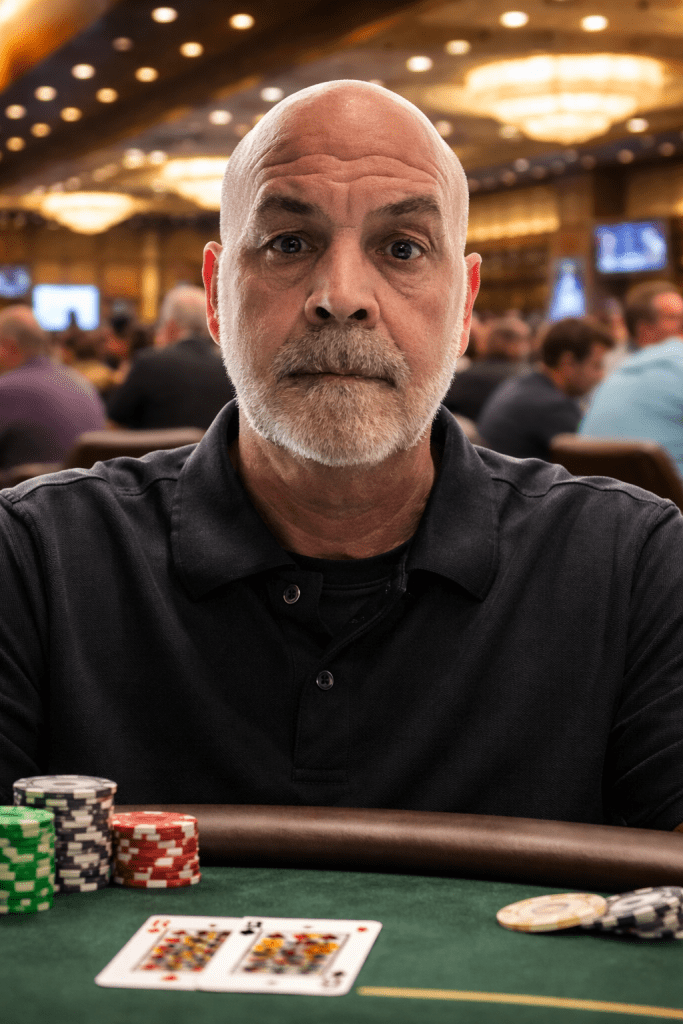
How to Play Pocket Jacks in Middle Position ($2/$5 Cash Game Poker)
Pocket Jacks. The hand everyone loves… until the flop comes out.
If you play $2/$5 no-limit hold’em cash games, you already know JJ can be tricky—especially in middle position, where action is still behind you. This guide breaks down the best way to play pocket Jacks in live poker, without getting too technical or robotic.
Let’s keep it real.
Are Pocket Jacks a Good Hand in Poker?

Yes—pocket Jacks are a premium starting hand. In fact, JJ is the fourth-best hand in Texas Hold’em. The problem isn’t the cards—it’s how people play them.
In live $2/$5 games, players:
Call raises way too wide Rarely bluff big Tell you exactly what they have with bet sizing
That means JJ is strong preflop but needs smart postflop decisions.
Preflop: How to Play Pocket Jacks in Middle Position
Always Raise Pocket Jacks
In a $2/$5 cash game:
Open to $20–$30 Go bigger if there’s a straddle or lots of callers
Raising builds the pot while thinning the field. Limping JJ is a leak.
Should You 4-Bet Pocket Jacks?
Most of the time? No.
Against typical live players:
A 3-bet usually means QQ+, AK Flat-calling keeps weaker hands in and avoids bloating the pot
Best play:
✔️ Call 3-bets in position
✔️ 4-bet only against aggressive or loose opponents
Flop Play With Pocket Jacks
Best Flops for JJ
Low, dry boards like:
9♣ 5♦ 2♠ 8♠ 8♥ 3♦
These are great spots to:
Continuation bet for value Protect against overcards
What If an Ace, King, or Queen Hits?
This is where most players mess up.
Seeing an overcard doesn’t mean you’re automatically beat—but it does mean slow down.
Smart approach:
Call one reasonable bet Fold to heavy turn or river pressure Don’t turn JJ into a hero call machine
In live poker, big bets usually mean big hands.
Turn & River Strategy: Pot Control Wins Money
Pocket Jacks are not a hand to go broke with in $2/$5 cash games.
Ask yourself:
What worse hands are calling? Would this player bluff here? Does their line make sense?
If the answer feels uncomfortable, folding is usually the right play—and that’s how winning players stay profitable.
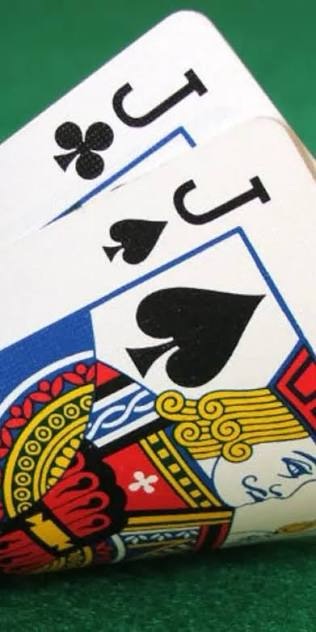
Common Pocket Jacks Mistakes in Live Poker
❌ Treating JJ like AA
❌ 4-betting tight players
❌ Calling down three streets on Ace-high boards
❌ Ignoring bet sizing and live reads
Final Thoughts: Best Way to Play Pocket Jacks in $2/$5
The best way to play pocket Jacks in middle position is simple:
Raise preflop Call more than you re-raise Keep the pot manageable Fold when the story says you’re beat
JJ isn’t cursed—you just have to respect the hand without marrying it.
Play it smart, and pocket Jacks will quietly become one of your most profitable hands in live cash games.
If you liked this article please like, share or subscribe, I’ll see you at the tables!
The First Time: Playing Poker in a casino!
First Time Playing in a Live Poker Room: What to Expect, Fear, and Excitement
Playing in a live poker room for the first time is an unforgettable experience. For many players who start online, the transition to live casino poker brings a mix of excitement, nerves, and curiosity. The sights, sounds, and pressure of real chips and real opponents make live poker feel like a completely different game—at least at first.
If you’re wondering what it’s like to play poker in a casino for the first time, this is exactly how it feels.
Walking Into a Casino Poker Room for the First Time
The moment you walk into a casino poker room, your senses go into overdrive. Chips clack against felt, dealers announce bets, and experienced players sit confidently at the tables. It’s exciting—but also intimidating for first-time live poker players.
Common thoughts run through your head:
Am I buying in correctly? What if I act out of turn? Do I look like a beginner?
Unlike online poker, there’s no screen to hide behind. Every decision happens in real time, in front of real people. This is often the biggest source of fear when playing live poker for the first time.
Sitting Down and Playing Your First Live Poker Hand
Once you sit down and the dealer starts shuffling, something changes. The nerves don’t disappear, but they settle into focus. You look at your cards, stack your chips, and realize this is still the same poker game—just more intense and more real.
Your first live poker hand feels important, no matter how small the pot. You start paying attention to things you may have overlooked online: betting speed, body language, table talk, and player tendencies. These live poker elements quickly become part of the experience.
Winning your first pot—even an uncontested one—brings a rush that confirms you belong at the table.
From Fear to Confidence in Live Poker
As the session continues, the fear of playing live poker fades. You get comfortable posting blinds, handling chips, and making decisions under pressure. Confidence builds hand by hand, and soon the excitement outweighs the nerves.
Many players discover that live poker is slower, more social, and more readable than online poker. The skills you already have still apply—patience, position, and discipline just become even more important.
Why Your First Live Poker Experience Matters
Your first time playing poker in a real poker room is more than just another session—it’s a milestone. It teaches you how to manage nerves, read opponents, and trust your instincts in a live environment.
Long after the session ends, you won’t remember every hand—but you’ll remember the moment you sat down, pushed chips forward, and officially became a live poker player.
If you’re enjoying this article or this blog please be sure to like or subscribe, it’s appreciated!

Hand of the day : 10 8 of Spades explode!
🃏 Hand of the Day: Turning a Monster Into Maximum Pressure
Early in a tournament, most players are trying to avoid big confrontations. But when the deck hands you a monster, the real skill is knowing how to extract every last chip without scaring your opponent away. Today’s hand is a masterclass in exactly that.
🎬 The Setup
Blinds are small, stacks are deep, and everyone’s still settling in. Hero picks up 10♠ 8♠ — a hand that loves deep‑stack poker. Villain wakes up with J♣ J♦, a premium pair they’re thrilled to play for value this early.
Both players see a flop… and the fireworks begin.
🌋 The Flop: 10♦ 8♥ 8♣
Hero flops a full house, tens full of eights. Villain flops an overpair that looks like the best hand on almost every board in the early levels.
Instead of checking, Hero leads out small — a sizing that looks like a standard stab with a piece of the board or a cheap probe with a mid‑pair. Villain, holding JJ, loves this. They call without hesitation, already thinking about building a pot.
Hero’s sizing keeps the trap wide open.
👑 The Turn: K♠
The king rolls off. It’s a card that:
- Doesn’t change Hero’s hand
- Doesn’t improve Villain
- And absolutely smashes Hero’s perceived range
This is where Hero shifts gears.
Hero fires big, representing a polarized range — strong kings, bluffs, maybe the occasional 10x. Villain, with an overpair and a suspicious mind, isn’t ready to fold. They call again, though the pot is now getting serious for an early level.
Hero is setting up the river shove perfectly.
💣 The River: 8♦
The deck delivers the dream: quad eights.
Hero now holds the stone nuts on a board where Villain still believes their overpair is good far more often than not. And because Hero bet small flop / big turn, the story is consistent with a hand that wants to get stacks in.
Hero moves all‑in, applying maximum pressure.
Villain tanks — but with JJ on a board where bluffs exist and Hero’s line looks aggressive rather than nutted, they eventually convince themselves to call.
And then they get the bad news.
🏆 The Result
Hero scoops a massive early‑tournament pot, instantly jumping into a commanding stack position. Villain is left wondering how an overpair could possibly be so wrong.
🎯 Tournament Takeaway
This hand is a perfect example of how bet sizing tells the story:
- Small flop bet keeps ranges wide and disguises strength
- Large turn bet builds the pot and pressures medium-strength hands
- River shove capitalizes on the narrative and extracts maximum value
Deep stacks reward creativity — and when you flop a monster, the best way to get paid is to make your opponent feel like you might be the one bluffing.
Hand of the day: AQ off runs into AK
Hand of the Day: AQ Shoves, Big Blind Wakes Up With AK
Blinds: (Tournament Play)
Hero Position: Dealer (Button)
Hero Hand: A♠ Q♦
Villain Position: Big Blind
Villain Hand: A♥ K♣
The Setup
Today’s Hand of the Day comes from a classic late-stage tournament scenario where stack sizes and position dictate aggressive decision-making.
Hero is on the dealer button, the most profitable seat at the table. Action folds around, and with a short-to-medium stack, Hero looks down at Ace-Queen offsuit — a premium hand in this spot.
With fold equity at a premium and weaker blinds likely to pass, Hero decides this is the perfect moment to apply maximum pressure.
Preflop Action
Hero open-jams from the button with AQ offsuit.
This shove accomplishes several things:
Forces the small blind out almost always Puts the big blind to a tough decision for their tournament life Maximizes fold equity while still having strong showdown value
The small blind folds.
The action is now on the big blind, who tanks briefly… and calls.
Big blind turns over AK offsuit.
Analysis
From Hero’s perspective, the shove is absolutely standard and profitable.
Why the shove works long-term:
AQ is ahead of most calling ranges Button position widens acceptable shove ranges Winning the blinds uncontested adds valuable chips
Unfortunately for Hero, this is one of the rare times the big blind wakes up with a better ace.
From the big blind’s side, calling is mandatory. AK dominates AQ, and folding here would be a major mistake with such a strong holding.
The Runout
With both players holding big slick-style hands, the board will determine everything. Hero needs:
A queen A miracle straight Or running cards
Otherwise, AK’s domination is likely to hold.
Regardless of the result, this is a cooler, not a misplay.
Final Thoughts
This hand is a great reminder of an important tournament truth:
You can make the right move and still lose.
Hero’s shove with AQ from the button is correct. Over hundreds of tournaments, this play prints chips. Sometimes, however, poker reminds us that variance is undefeated.
Shake it off, reload if you can, and look for the next spot.
That’s today’s Hand of the Day ♠️

 THE PLAYER IN SEAT 4..
Recent Comments